



ASIA ELECTRONICS INDUSTRYYOUR WINDOW TO SMART MANUFACTURING
Micron to Boost Chip Supply Grit in New Singapore Line
Micron Technology has been making headway in expanding its manufacturing capabilities in a bid to meet global memory chip shortage due to growing demand triggered by artificial intelligence (AI). This time, the company said it is investing about US$24 billion over the next decade in a new wafer fab facility in Singapore.
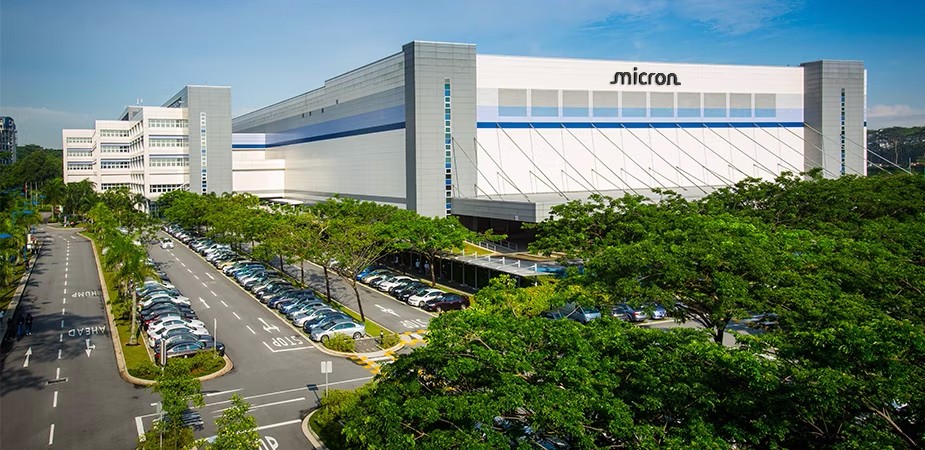
Headquartered in Boise, Idaho in the United States, Micron has broke the round on Tuesday (Jan. 27) an advanced wafer fabrication facility located within its existing NAND manufacturing complex in Singapore. The new facility will provide about 700,000 square feet of cleanroom space.
“Micron’s leadership in advanced memory and storage is enabling the AI-driven transformation reshaping the global economy,” said Manish Bhatia, executive vice president of global operations at Micron Technology.
Demands from AI, Data-Centric Applications
Micron expects wafer output in the soon-to-rise facility in Singapore will commence in the second half of 2028. Accordingly, this will help the company in addressing growing market demand for NAND technology driven by the rapid expansion of AI and data-centric applications.
This new double-story wafer fab will become an integral part of Micron’s NAND Center of Excellence in Singapore. The facility provides the essential capacity to support continued technology transitions, positioning Micron to meet long-term demand for advanced storage solutions.
Additionally, co-locating R&D with manufacturing improves efficiencies, accelerates time-to-market and deepens research partnerships between industry and academia.
The new facility, once becomes fully operational, will create around 1,600 jobs. Thus, this will support about 3,000 new jobs in Singapore, to include its concurrent construction of a high-bandwidth memory (HBM) facility. These positions will focus on fab engineering and operations, integrating AI, advanced robotics, and smart manufacturing technologies.
Boosts HBM Grit
In January 2025, Micron also broke the ground of a new advanced packaging HBM facility. Specifically, the facility is on tract to contribute to Micron’s HBM supply in calendar year 2027.
As HBM becomes a part of Micron’s Singapore manufacturing footprint, the company expects opportunities for synergies between NAND and DRAM production.

HBM is a type of computer memory architecture that utilizes a 3D stacking technology. For that reason, it enables to achieve significantly higher bandwidth compared to traditional DRAM for high-performance computing applications like graphics processing, networking, and AI.
U.S., Taiwan Fabs
Aside from the Singapore fab, Micron has also been making aggressive moves at the start of 2026, cementing its global expansion plans. Particularly, the company has also broken the ground for its US$100 billion memory mega fab site in New York and has also sealed its intent to acquire the fabrication site of Powerchip Semiconductor Manufacturing Corporation (PSMC) in Tongluo, Taiwan.
The New York project is a cornerstone of Micron’s approximately US$200 billion broader U.S. expansion vision. This also includes two leading-edge high-volume fabs in Idaho, the expansion and modernization of its existing manufacturing fab in Virginia, advanced HBM packaging capabilities, and R&D. Micron said all of these will drive American innovation and technology leadership.
These investments support Micron’s goal of producing 40 percent of its DRAM in the United States and are expected to generate approximately 90,000 U.S. jobs.
Meanwhile, Micron’s deal with PSMC will also include an existing 300mm fab cleanroom.
27 January 2026
- Share: