


ASIA ELECTRONICS INDUSTRYYOUR WINDOW TO SMART MANUFACTURING
TI, NVIDIA Partner on Humanoid Safety With Real-Time Sensor
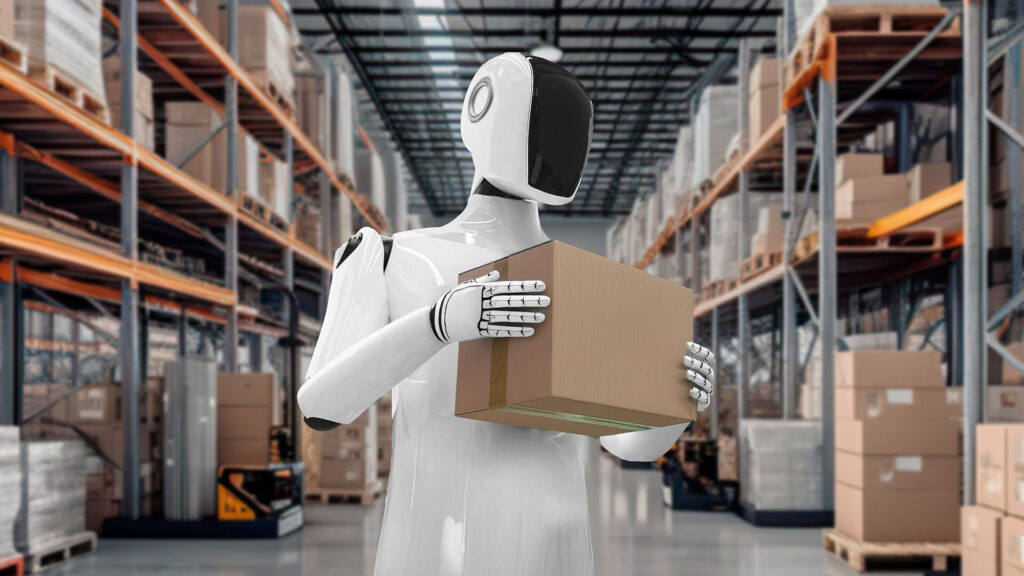
Texas Instruments (TI) and NVIDIA have announced a strategic collaboration aimed at solving one of the most significant hurdles in robotics: the safe deployment of humanoid machines in unpredictable, real-world environments.
By integrating TI’s expertise in deterministic real-time control and sensing with NVIDIA’s high-performance AI computing and simulation platforms, the partnership seeks to bridge the gap between virtual training and physical implementation. The collaboration focuses on providing developers with a functional safety-capable foundation to move humanoid prototypes into scalable, commercially viable production.
Bridging the “Perception Gap”
For humanoid robots to operate safely alongside humans, they require human-like perception that remains reliable regardless of environmental challenges. While vision-only systems often struggle with lighting glares, glass surfaces, or dusty industrial settings, TI is introducing a hardware-based solution to harden these systems.
A cornerstone of the collaboration is a new sensor fusion solution that integrates TI’s IWR6243 mmWave radar technology with the NVIDIA Jetson Thor robotics computer. This enables low-latency, 3D perception, and safety awareness for humanoid robots.
| TI – NVIDIA Solution Highlights | |
| Low Latency Processing | Using the NVIDIA Holoscan Sensor Bridge, the system enables low-latency 3D perception |
| Reliable Detection | By fusing radar data with camera feeds, the solution provides consistent detection of transparent obstacles, such as glass doors, and even reflective surfaces, that often “blind” traditional optical sensors |
| Robustness | Maintains performance in low-light or bright glare, and even airborne contaminants like fog or dust. Hence, also suitable in hospitals, retail spaces, and manufacturing floors |
From Simulation to the Factory Floor
While NVIDIA’s AI stack allows robots to learn physics and behaviors in massive simulated environments, the TI partnership provides the “nervous system” required for the physical world.
“The next generation of physical AI demands seamless integration between sensing, control, power, and safety systems,” said Giovanni Campanella, General Manager of Industrial Automation and Robotics at TI. “Our portfolio bridges the gap to real-world applications, allowing developers to validate complete humanoid systems earlier in the development cycle.”
Meanwhile, Deepu Talla, Vice President of Robotics and Edge AI at NVIDIA, emphasized the processing requirements of this integration: “Synchronizing complex AI models with real-time sensor data and motor controls requires a massive leap in processing power. TI’s sensing and power management technologies provide the foundation needed to accelerate this deployment.”
06 March 2026
- Share: