


ASIA ELECTRONICS INDUSTRYYOUR WINDOW TO SMART MANUFACTURING
Fuji to Soar Chip Placement Tech as New SATAS Member
Japanese research group Semiconductor Advanced Technology Alliance for Systems (SATAS) is pushing further the boundaries of backend semiconductor manufacturing technology as it adds new member companies, the latest of which is FUJI Corporation.
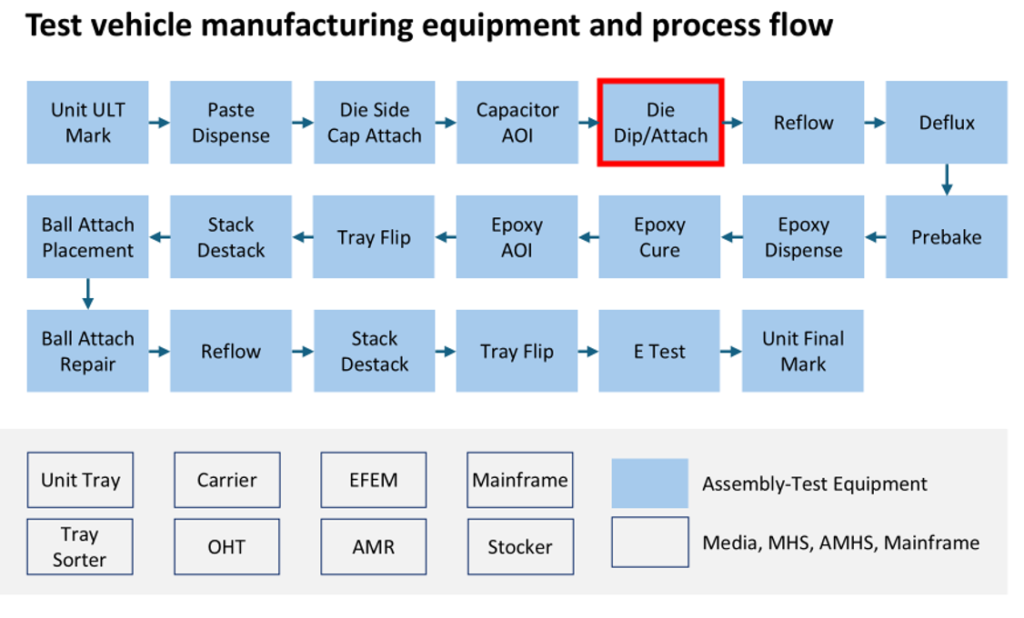
Specifically, Fuji will lead the research and development (R&D) for die placement processes, which will heavily focus on the automation and standardization of semiconductor back-end manufacturing. Moreover, the research group also selected Fuji’s NXTR A pick and place machine for use in the R&D project.
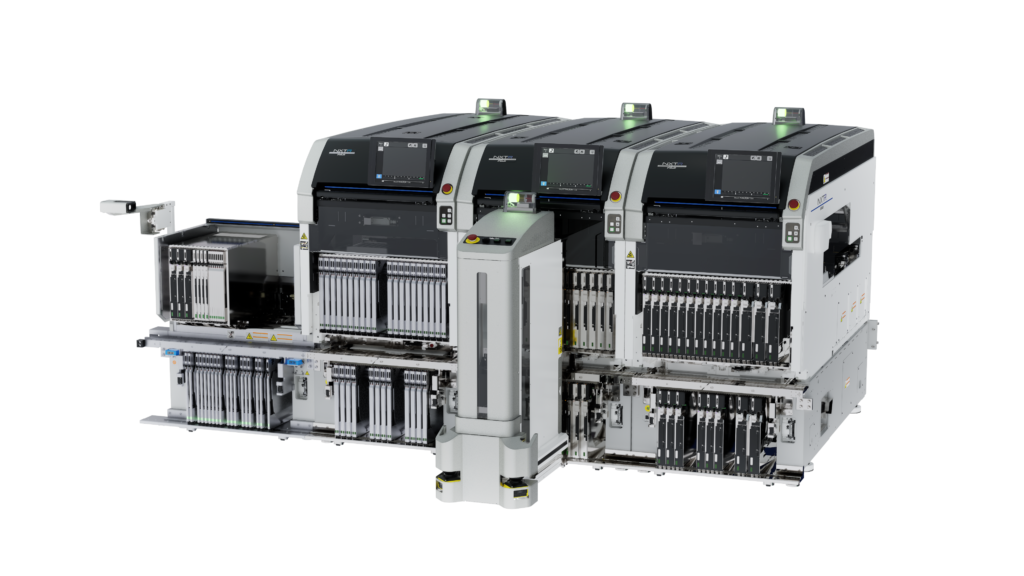
for use in R&D (Image Credit: Fuji Corporation)
“Through research and development of die placement process and its automation technologies using the NXTR, Fuji will contribute to advancing automation and standardization in semiconductor back-end manufacturing,” Fuji said in a statement.
Automating, Standardizing Chip Backend Processes
As part of SATAS, Fuji will build upon the technical insights and expertise in the semiconductor back-end manufacturing field gained through this initiative and advance further technological development.
Because semiconductor backend processes are critical in chip manufacturing, Fuji, as a member of SATAS, will be able to contribute to the automation and standardization of chip backend processes.
Moreover, the partnership will also address challenges in increasing miniaturization by utilizing Fuji’s low-impact, high-accuracy, and high-speed placement solutions. At the same time, the company will be able to enhance its die placement technology to improve efficiency of chip packaging.
“This field (die placement process), within increasingly sophisticated semiconductor back-end manufacturing, demands a higher level of placement accuracy and stable automation technology. We will steadily advance R&D as a member of the project by integrating the high accuracy placement technology and automation technology we have cultivated over the years,” said Takeshi Sato, Fuji Robotic Solutions Division General Manager.
Formed in 2024, the mission of SATAS is to transform and fully automate packaging, assembly and testing manufacturing processes. It aims to create the technical specifications and open industry standards necessary for assembly-test process automation, develop and implement equipment, and test the equipment and integrated pilot line with the objective of commercializing the solution in 2028.
06 March 2026
- Share: