

ASIA ELECTRONICS INDUSTRYYOUR WINDOW TO SMART MANUFACTURING
IMI to Chart 2026 Growth with Strategic Expansion
Integrated Micro‑Electronics, Inc. (IMI) is entering 2026 with a sharper strategic focus following years of transformation programs that streamlined its footprint and a return to profitability in 2025.
With restructuring largely completed, the company is now prioritizing targeted growth in safety‑driven automotive electronics, power modules, and high‑reliability industrial applications, according to annual report.
“As we enter the next chapter of IMI’s transformation, we do so with a stronger foundation, a sharper strategic focus, and a renewed momentum. The disciplined actions we have taken to optimize our global footprint and enhance our commercial and operational capabilities are evident in our return to profitability and improved margins,” said Louie Hughes, President and CEO of IMI, in his report to shareholders.

Growth Drivers: Anchored on Safety, Power, Connectivity
IMI’s 2026 strategy is centered on end‑markets where electronics content, system complexity, and quality requirements continue to rise.
In automotive, the company is positioning for continued growth in active‑safety applications as demand grows for wider adoption of Level‑2 ADAS. Demand for cameras, driver monitoring systems, LIDAR, and advanced lighting remains resilient even as global vehicle volumes moderate. IMI also sees rising engineering and qualification demands for inverters and fast‑charging systems, reinforcing the importance of power‑electronics capabilities.
Related Post: Strong Margins Push IMI to Profit in 2025
Beyond mobility, IMI is expanding its reach in industrial connectivity markets. Investments in data centers, edge devices, smart infrastructure, and industrial electrification are driving demand for high‑density power systems and robust thermal management. At the same time, regulatory intensity in medical electronics is increasing customer preference for EMS providers with strong traceability and compliance expertise.
From EMS to “EMS+1” Through Vertical Integration
A core pillar of IMI’s 2026 positioning is its “EMS+1” model, which extends beyond traditional electronics assembly through vertically integrated capabilities. These include advanced plastics and injection molding, precision machining, automated testing systems, camera‑vision technology, and power‑module packaging for IGBT and silicon‑carbide applications.
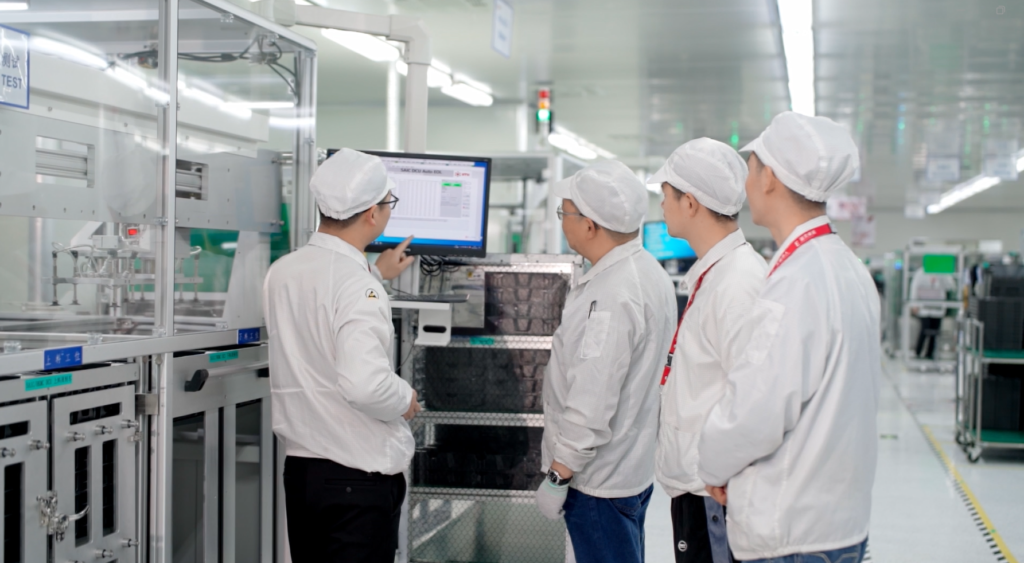
IMI said this integrated approach reduces supply‑chain risk for OEMs and Tier‑1 customers, shortens time‑to‑market, and supports long‑lifecycle, high‑reliability programs—particularly in automotive safety, industrial power, and medical devices.
Footprint Optimization and Supply‑Chain Resilience
IMI’s strategy for 2026 builds on a streamlined manufacturing footprint, which started in 2024. Specifically, it closed its facilities in Tustin in United States, Singapore, Japan, and Chengdu in China and consolidated operations under fewer, larger production facilities and improve operational cost efficiency.
In 2025, IMI also sold its site in the Czech Republic and transferred key customer programs to its larger and more competitive facilities in Bulgaria and Serbia, consolidating its European operations into a single regional hub.
Within Shenzhen, China, IMI merged its Kuichong operations into the larger Pingshan facility, centralizing its footprint within the region. This enabled the company to achieve meaningful factory overhead savings through significant improvements in manufacturing utilization, while strengthening its China footprint with stand-alone large sites in both Northern and Southern China.
“These efforts have transformed our company into a more resilient, more competitive, and more customer-focused organization. Today, IMI is better positioned to serve our customers and deliver sustainable value to our shareholders,” said Hughes.
On the supply‑chain front, IMI is reducing reliance on a fragmented supplier base by expanding its strategic supplier initiative.
Financial Performance as a Foundation
IMI’s forward strategy is underpinned by a markedly stronger financial position. In 2025, the company returned to profitability, posting consolidated net income of US$13.5 million and core net income of US$20.3 million. Core gross margin improved to 9.6%, while adjusted EBITDA rose 42% year on year. Operating cash flow supported a sharp reduction in net debt to US$119.5 million.
The company’s transformation program, including the consolidation of manufacturing sites and the divestment of non-core assets, has resulted in a leaner, more competitive operation. IMI generated US$73.2 million in operating cash flow and reduced net debt to US$119.5 million.
With restructuring largely complete and capital spending disciplined, IMI enters 2026 focused less on recovery and more on executing a targeted growth strategy aligned with safety, connectivity, and power‑electronics trends.
28 April 2026
- Share: