


ASIA ELECTRONICS INDUSTRYYOUR WINDOW TO SMART MANUFACTURING
Infineon to Soar Power Chip Capacity With New Thai Hub
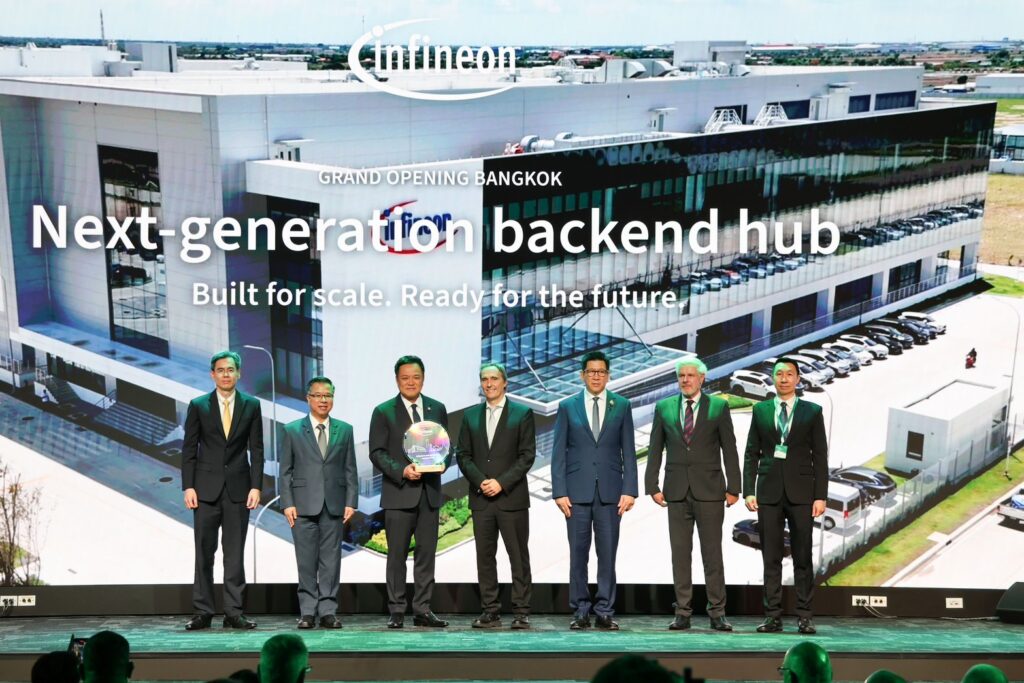
Thailand has strengthened its position in the global semiconductor industry following the inauguration of a US$1.4 billion power semiconductor manufacturing complex by Infineon Technologies AG.
The investment marks one of the country’s most significant semiconductor projects and reflects growing industry efforts to diversify supply chains while meeting surging demand from artificial intelligence, electric vehicles, industrial automation and data center applications.
The new facility in Samut Prakan begins operations with Module A and represents Infineon’s third global power module production hub alongside existing sites in Germany and China. Upon completion of all five planned modules, the complex is expected to become the company’s largest back-end assembly and testing facility worldwide.
Thailand Targets Higher-Value Semiconductor Manufacturing
The investment arrives at a time when governments and chipmakers are accelerating efforts to localize and diversify semiconductor production. For Thailand, the project supports a broader strategy to move beyond traditional automotive manufacturing and electronics assembly into higher-value semiconductor activities.
Speaking at the inauguration ceremony, Anutin Charnvirakul, Prime Minister of Thailand, emphasized the country’s growing role in global semiconductor value chains.
Must Read: New Thailand Plan to Push Landmark Chip Roadmap
“The semiconductor ecosystem is deeply interconnected, and Thailand is stepping up to play an increasingly important role in the global supply chain,” said Anutin Charnvirakul. “Thailand’s National Semiconductor Strategy, launched last week, sets a clear direction for building a competitive and resilient chip industry.”
Just last week, Thailand has approved its first national strategy for the semiconductor and advanced electronics industry. Specifically, the national plans aims to target about US$80 billion in cumulative investment by 2050.
The investment was promoted by Thailand’s Board of Investment (BOI) and aligns with the country’s newly launched National Semiconductor Strategy, which prioritizes advanced semiconductor technologies and ecosystem development.
Advanced Smart Factory Supports Next-Generation Demand
The first phase includes 30,000 square meters of cleanroom space and a dedicated prototype research and development center. Across five planned phases, the site is expected to expand to 150,000 square meters of cleanroom space, approximately double the footprint of Infineon’s current largest back-end manufacturing facility.
The complex has been designed as a highly automated smart factory featuring robotics, automated material handling systems and end-to-end digital manufacturing processes. Notably, it is Infineon’s first integrated facility that combines front-end wafer testing, back-end power module assembly and integrated circuit testing within a single location.
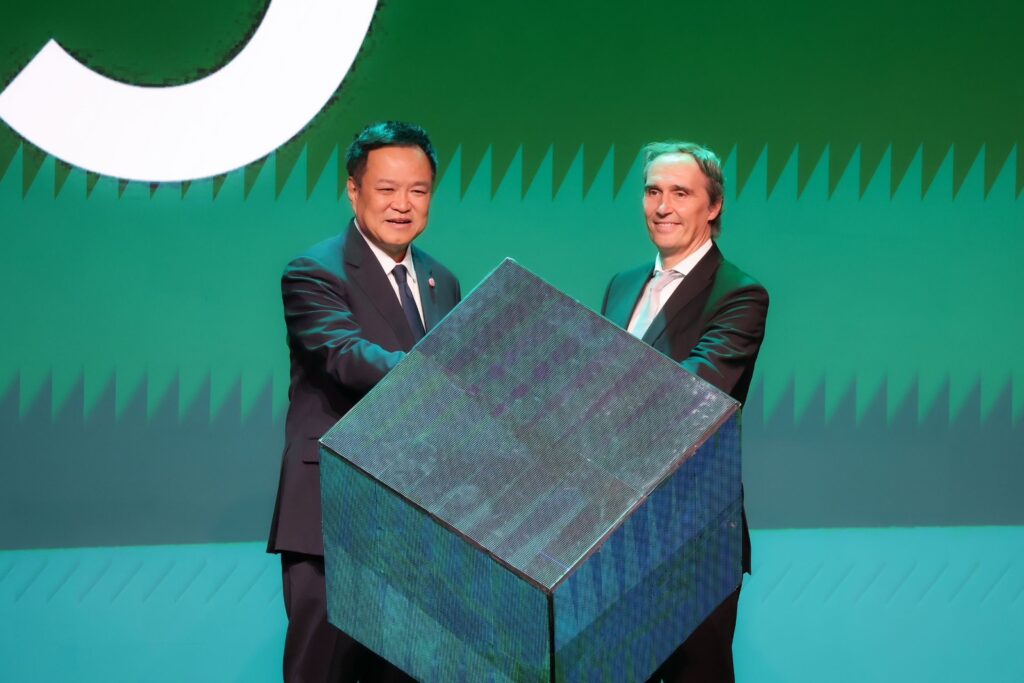
According to Alexander Gorski, Chief Operating Officer of Infineon Technologies AG, Thailand offers a strong foundation for the company’s regional expansion strategy.
“Infineon chose Thailand for its mature industrial ecosystem, strong automotive and electronics base, and established semiconductor cluster,” said Alexander Gorski. “This manufacturing hub will help Infineon balance its regional production network, strengthen supply-chain resilience and capture growing demand across Asia.”
Workforce Development Emerges as Strategic Priority
Beyond manufacturing capacity, the project places significant emphasis on talent development. Under the BOI-approved investment package, Infineon is expected to create more than 5,000 skilled local jobs across the project’s five phases.
In addition, Infineon is collaborating with the Thai Semiconductor Industry Association and local universities to develop at least 60 specialized semiconductor courses, train 1,100 undergraduate students and support 18 joint research projects focused on process automation, big data and materials engineering.
“Our strategy goes far beyond attracting capital or adding production capacity; it is about building technological capability in Thailand,” said Narit Therdsteerasukdi, Secretary General of the BOI.
As demand for power semiconductors continues to increase across AI infrastructure, electric mobility, clean energy and industrial applications, the new Thailand hub positions both Infineon and Thailand to play a larger role in the global semiconductor supply chain while supporting long-term industrial competitiveness.
01 October 2026
- Share: