



ASIA ELECTRONICS INDUSTRYYOUR WINDOW TO SMART MANUFACTURING
India’s Quantum Leap: Scaling Hardware, Securing Sovereignty
As the National Quantum Mission (NQM) marks its third year, India is shifting decisively from theoretical research toward the delivery of high‑performance quantum hardware. With a functional 64‑qubit system slated for mid‑2026 and a clear roadmap toward a 1,000‑qubit milestone by 2030, the nation is emerging as a critical player in the global deep‑tech race.
Dr. Ajai Chowdhry, Chairman of the Mission Governing Board, the NQM has advanced at a remarkable pace. Starting from a baseline of seven qubits just a year ago, the mission has already developed a 64‑qubit chip. This progress is anchored at the Indian Institute of Science (IISc) in Bengaluru, which coordinates a nationwide network of research hubs and startups.
India’s strategy is notably sovereign. Beyond computation, the mission is aggressively pursuing a “quantum‑secure” digital economy to defend against “harvest now, decrypt later” threats. This effort involves a hybrid security model combining Quantum Key Distribution (QKD) and Post‑Quantum Cryptography (PQC). With a workforce of more than 750 quantum scientists and a talent pipeline spanning 100 universities, India is not just building quantum computers; it is establishing a complete ecosystem for technological independence.
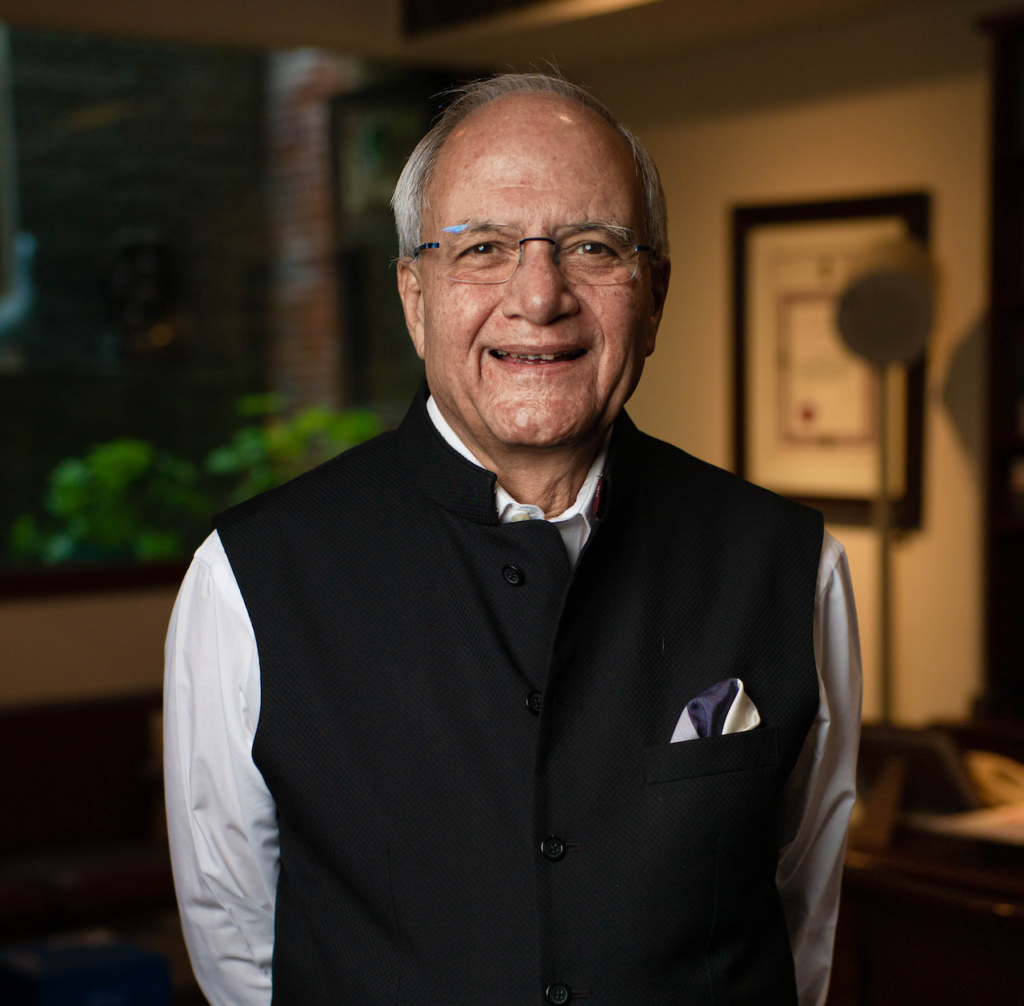
In this exclusive interview with AEI, Dr. Ajai Chowdhry breaks down how the country is addressing technical hurdles and the timeline for scaling.
“Within the first year, we developed a 64-qubit quantum computer chip that will power a functional system by July or August 2026.” — Dr. Ajai Chowdhry, Chairman, Governing Board of India’s National Quantum Mission
Question: What is the current state of India’s quantum readiness?
Dr. Chowdhry: We designed a seven‑ to eight‑year plan with the objective of achieving a 1,000‑qubit quantum computer. Last year, we were at about seven qubits. Within that first year, we developed a 64‑qubit quantum computer chip that will power a functional system available by July or August 2026. Our strategy works across multiple materials. In superconducting, we will have a 60‑plus‑qubit system this year, while other approaches are expected to reach 20 to 40 qubits shortly. Our roadmap expects us to reach approximately 300 qubits within two years, scaling to 1,000 qubits by around 2030.
Question: What are the technical and industrial requirements to meet these targets?
Dr. Chowdhry: The key is not relying on a single technology. We are working on superconducting systems, photonics, and other approaches. Several labs are achieving 30 to 40 qubits, but the 64‑qubit system will be the first formal, deployable quantum computer product. The hub at IISc Bengaluru is coordinating efforts across universities and research institutions to advance these different technologies.
“Our roadmap expects us to reach approximately 300 qubits within two years, scaling to 1,000 qubits by around 2031.”
Question: How serious is the “harvest now, decrypt later” threat for India?
Dr. Chowdhry: This is a very serious concern. Data collected today could be decrypted once powerful quantum computers become available, posing a significant risk to national security and sensitive personal data.
Question: How is India preparing for this threat institutionally?
Dr. Chowdhry: We formed a national task force, with close to about 20 people, that defined timelines for becoming quantum secure. The report has been approved and sets a target implementation window aligned with 2029. Critical sectors like financial systems, power grids, and defense are designated for fast‑track implementation. These plans were developed with regulators, all of whom are fully aligned.
Question: Regarding the threat, which actually concerns you the most?
Dr. Chowdhry: Our concern at this moment is that our neighbor China could have a quantum computer which could be very, very powerful and could crack our systems even before 2028 or 2029. Hence, the urgency is quite strong in the country. Because in China, you never know what is happening. With all other countries, we know where they are, but in the case of China, we don’t really know.
Question: Which sectors are most at risk?
Dr. Chowdhry: The most critical areas are telecommunications, financial systems, power grids, intelligence, and defense. These five sectors are our highest priority for quantum‑secure implementation.
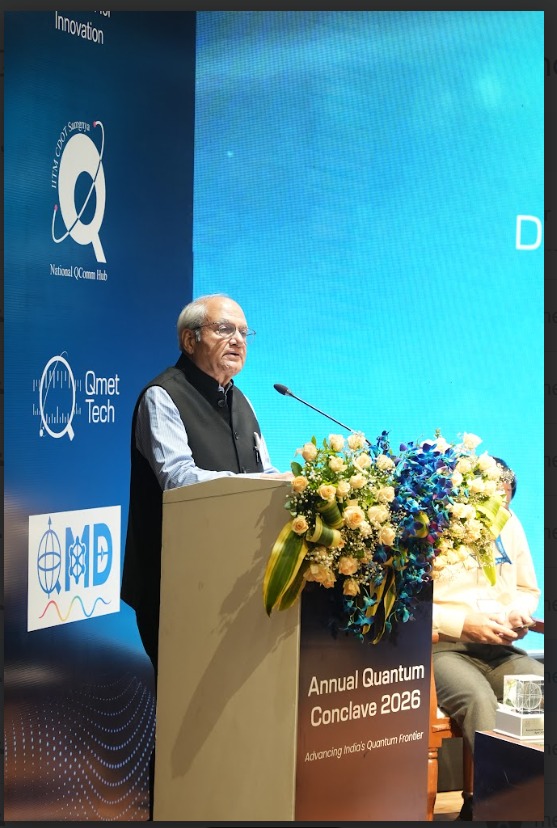
Question: How does India balance rapid digitization with these growing threats?
Dr. Chowdhry: We have proactively involved Digital India stakeholders in the planning process. Key platforms like UPI (Unified Payments Interface) are directly connected to the RBI (Reserve Bank of India), and government networks are participating in the task force. We recommended a hybrid approach using hardware‑based QKD and PQC software. Importantly, both are developed and manufactured in India, tailored to our national requirements.
Question: How important is the electronics manufacturing ecosystem to this mission?
Dr. Chowdhry: It is extremely important. Quantum computing requires advanced chip fabrication. Large semiconductor fabs are coming to India, which is of great value to the quantum mission, but we are not waiting for them. We have established a parallel program for quantum chip fabrication within research institutions. A larger quantum fab at IISc is expected to be operational next year, with smaller facilities at IIT Bombay and IIT Delhi supporting early‑stage production.
Question: Will quantum be an inflection point for India’s semiconductor industry?
Dr. Chowdhry: Absolutely. We have a nationwide quantum education initiative, with quantum technology minors being offered at 100 universities. We already have around 750 quantum scientists and 300 engineers in startups. This foundation positions quantum as a major growth engine for our semiconductor ecosystem.
Question: How critical are these technologies to geopolitical stability and defense?
Dr. Chowdhry: Extremely critical. Future conflicts will be shaped by semiconductor capabilities. Our defense organizations are working with the NQM on indigenous development, including drone components and quantum sensing as an alternative to GPS for navigation and positioning.
Question: Where does India’s competitive advantage lie compared to the United States and China?
Dr. Chowdhry: Our strongest advantage is in quantum communications. We are progressing rapidly, and an Indian startup has already established operations in the U.S. to provide QKD solutions. India is well positioned to become a global supplier of quantum‑secure communication technologies.
20 April 2026
by Cristian Canoza
- Share:


About This Article:
Cristian Canoza