


ASIA ELECTRONICS INDUSTRYYOUR WINDOW TO SMART MANUFACTURING
TEL Accelerates Fab Automation With NVIDIA AI
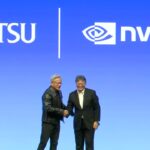
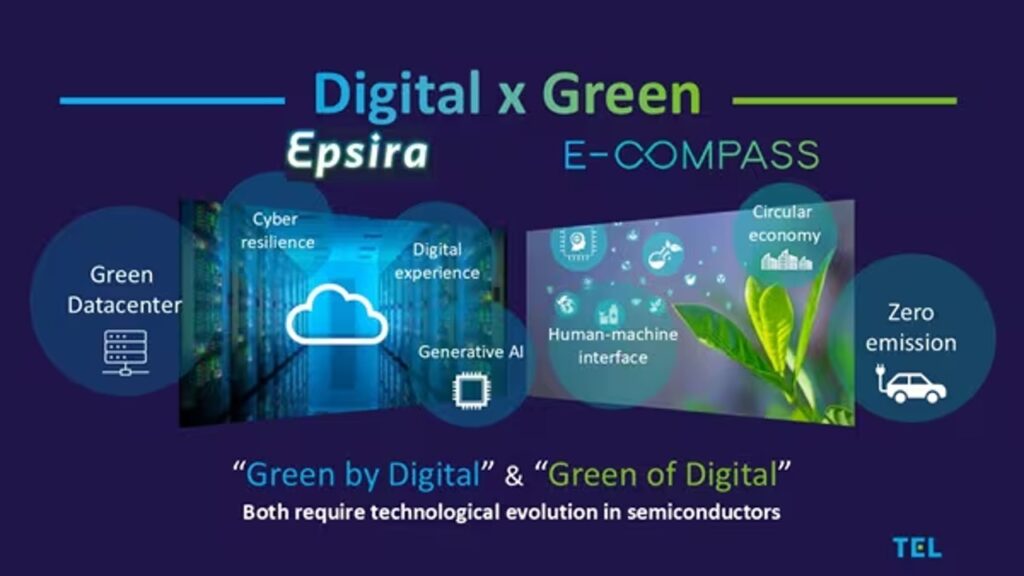
Tokyo Electron (TEL) has expanded its collaboration with NVIDIA to accelerate the development of agentic AI and robotics solutions designed to improve semiconductor manufacturing operations. The initiative builds on TEL’s Epsira™ digital transformation platform and incorporates several NVIDIA technologies aimed at enhancing automation, equipment performance and production efficiency.
The collaboration leverages NVIDIA’s Agent Toolkit, including NVIDIA NeMo, NVIDIA NIM and NVIDIA NemoClaw blueprints, alongside the NVIDIA Isaac robotics development platform. Together, these technologies will support TEL’s efforts to create more intelligent and autonomous semiconductor manufacturing environments.
According to TEL, the integration of NVIDIA Isaac enables the company to feed equipment designs into digital twins that are connected with NVIDIA Omniverse libraries for simulation. This capability is expected to improve robot training speed and accuracy, particularly in maintenance scenarios involving multiple tool configurations.
Digital Twins and AI Agents Drive Operational Gains
A key focus of the collaboration is the use of digital twins and AI-powered agents to streamline fab operations. Digital twin technology allows virtual simulation of maintenance activities before deployment in production environments, helping optimize robotic operations and reduce complexity.
On the AI side, NVIDIA NeMo will support agent training, tuning and evaluation, while NemoClaw blueprints are designed to simplify agent operations and strengthen secure deployment. These capabilities are intended to help TEL advance AI-driven troubleshooting, maintenance and operational decision-making across semiconductor manufacturing facilities.
Epsira™ Focuses on Productivity and Equipment Stability
TEL’s Epsira™ platform is designed to improve customer productivity by increasing manufacturing efficiency, enhancing yields and boosting equipment availability. The platform incorporates AI-based Mean Time Between Wet Cleaning (MTBWC) extension analysis, robotics maintenance and AI troubleshooting analysis to reduce both planned and unplanned downtime.
The company said the digital transformation infrastructure aims to minimize operational variability and maximize equipment stability through greater use of data and automation. The long-term vision is to enable autonomous equipment operation that requires less reliance on specialized human intervention.
“We are pleased that our collaboration with NVIDIA, a world leader in the AI era, has moved to an even deeper state,” said Keiichi Matsushima, Vice President & General Manager, Corporate Development Division at TEL. “This deeper collaboration will allow us to further leverage TEL’s Epsira™ program to enhance our customers’ productivity by enhancing manufacturing utilizing Robotics maintenance and AI troubleshooting analysis.”
Industry Moves Toward Greater Automation
NVIDIA believes the partnership reflects a broader shift toward automation across semiconductor manufacturing.
“Semiconductor manufacturing is entering a new era of automation, where robotics can help fabs drive greater uptime, precision and resilience across increasingly complex production environments,” said Amit Goel, Senior Director of Robotics and Edge AI Ecosystem at NVIDIA.
The expanded alliance highlights how AI, robotics and digital twin technologies are increasingly being combined to support more efficient, intelligent and resilient semiconductor production operations.
16 July 2026
- Share: