



ASIA ELECTRONICS INDUSTRYYOUR WINDOW TO SMART MANUFACTURING
SEMICON Taiwan 2026 Unveils AI Chip Growth Blueprint
Global semiconductor leaders gathered at SEMICON Taiwan 2026 to outline a new roadmap for the artificial intelligence era, highlighting the industry’s rapid growth, the need for architectural innovation, and the critical role of international collaboration in building resilient supply chains.
During the event, SEMI President and CEO Ajit Manocha announced updated industry projections that underscore the scale of the opportunity ahead. After surpassing $1 trillion in global output in 2025, the semiconductor sector is now expected to reach $2 trillion by 2030 and $3 trillion by 2035.
AI Expansion Accelerates Industry Transformation
As artificial intelligence evolves from model training toward widespread inference and autonomous agent applications, demand for advanced semiconductor technologies is accelerating across the value chain. Industry executives emphasized that future growth will depend not only on computing power but also on innovations in architecture, networking, memory, packaging, and manufacturing.

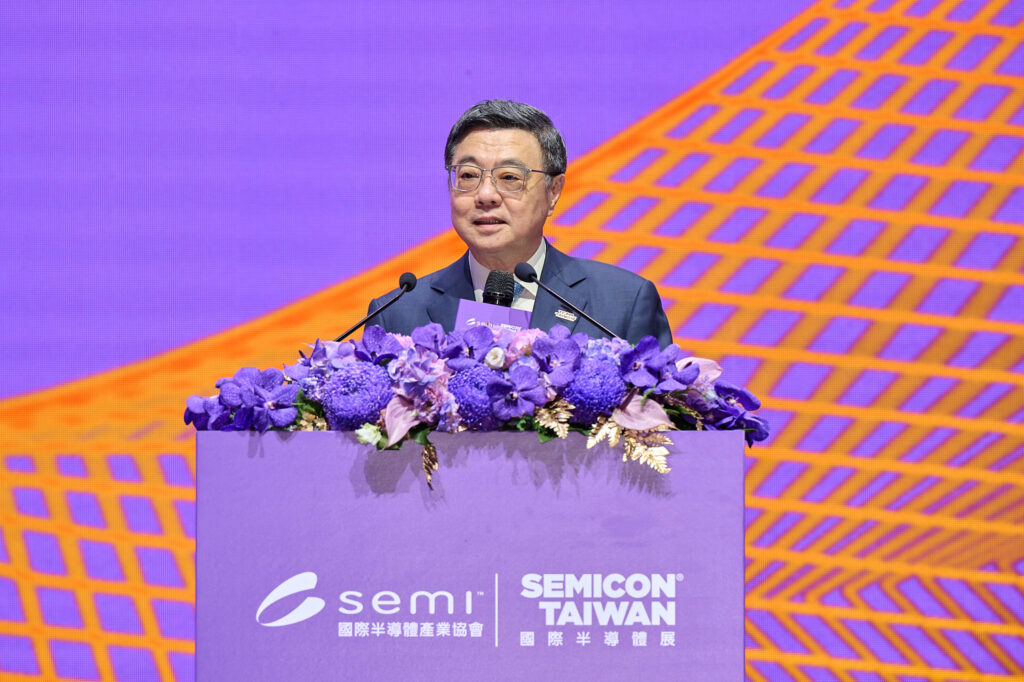
Taiwan Premier Cho Jung-tai reinforced the strategic importance of semiconductors in global innovation. He highlighted the government’s commitment to strengthening research and development in advanced process technologies, integrated circuit design, and advanced packaging. In addition, Taiwan plans to support industry expansion through policies focused on land, energy, talent, and capital resources.
“Semiconductors represent a borderless engine of global innovation,” Cho said while reaffirming Taiwan’s support for international technology partnerships.
Technology Leaders Call for End-to-End AI Infrastructure Redesign
The event’s Master Forum & Global Ecosystem Summit brought together senior executives from Google, Microsoft Azure, NVIDIA, Micron, Broadcom, Meta, KLA, Merck, Qnity and Infineon to discuss the next generation of AI hardware infrastructure.
Executives agreed that agentic AI will require comprehensive changes across computing platforms. Discussions centered on custom silicon, high-speed interconnects, memory performance, advanced networking architectures, and energy-efficient manufacturing.
Micron CTO Scott DeBoer underscored the growing importance of memory innovation in AI deployment.
“The speed of AI scaling depends entirely on the speed of memory evolution,” DeBoer said.
Meanwhile, speakers highlighted advanced packaging, 3D architectures, sustainability initiatives, and integrated materials workflows as key enablers of future semiconductor growth. Industry discussions also pointed to advanced packaging as a rapidly expanding segment that will play a central role in supporting future AI workloads.
‘Make with Taiwan’ Emerges as New Industry Vision
A closing fireside discussion featuring leaders from ASE, TSMC/TSIA, MediaTek, Foxconn/TEEMA and Unimicron focused on strengthening global supply chain resilience. Participants agreed that future competitiveness will increasingly be determined by ecosystem strength rather than individual company performance.
As a result, Taiwan is advancing a new industry vision: “Make with Taiwan.” The initiative encourages global partners to collaborate across design, materials, manufacturing, packaging, and system integration. Industry leaders said this approach will help create more resilient and sustainable supply chains while supporting continued innovation in the multi-trillion-dollar AI economy.
The message emerging from SEMICON Taiwan 2026 was clear: the next phase of AI growth will be driven by deep collaboration across the semiconductor ecosystem. As the industry advances toward a projected $3 trillion market, success will increasingly depend on integrated innovation, supply chain resilience, and global partnerships.
03 September 2026
- Share: