


ASIA ELECTRONICS INDUSTRYYOUR WINDOW TO SMART MANUFACTURING
SEMI: India to Rise as Global Chip Powerhouse
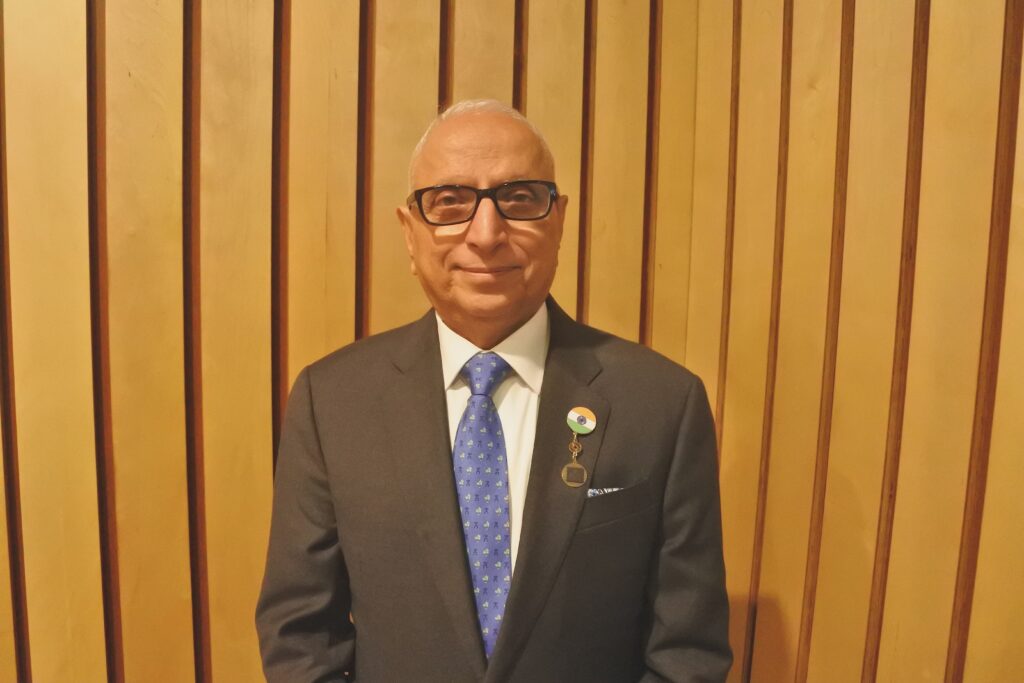
In this exclusive interview, SEMI President and CEO Ajit Manocha discusses India's rapid ecosystem development, strong policy support, talent advantages, rising global investor confidence, and why the country is poised to become a major semiconductor hub. He also shares insights on SEMICON India's growing impact and the industry's path from "Silicon to Systems."
India’s semiconductor ambitions are moving beyond aspiration and into execution. What began as a policy-driven effort to establish a foothold in chip manufacturing has rapidly evolved into a broad-based strategy to build a complete electronics value chain, spanning design, materials, equipment, manufacturing, packaging, testing, and systems integration.
The strong turnout at SEMICON India, record participation from global industry players, and a surge of partnership agreements underscore growing international confidence in the country’s semiconductor roadmap.
SEMI, the global industry association, has played a pivotal role in developing semiconductor ecosystems across major manufacturing hubs, including Taiwan, South Korea, and Southeast Asia. According to SEMI President and CEO Ajit Manocha, India is now entering a similar phase of accelerated development. More importantly, the country is not merely pursuing fabrication facilities but is focused on nurturing the broader ecosystem necessary to sustain long-term industry growth.
India’s emergence comes at a critical juncture for the global semiconductor industry. Supporting this development has been a growing network of collaborations between industry bodies, academia, government agencies, and private enterprises. For one, SEMI has worked closely with stakeholders across India. This includes partnerships and engagement initiatives with organizations such as the India Electronics and Semiconductor Association (IESA), a strategic partner of SEMI through SEMI India. SEMI has been working as well with central and state government agencies involved in electronics and semiconductor development.
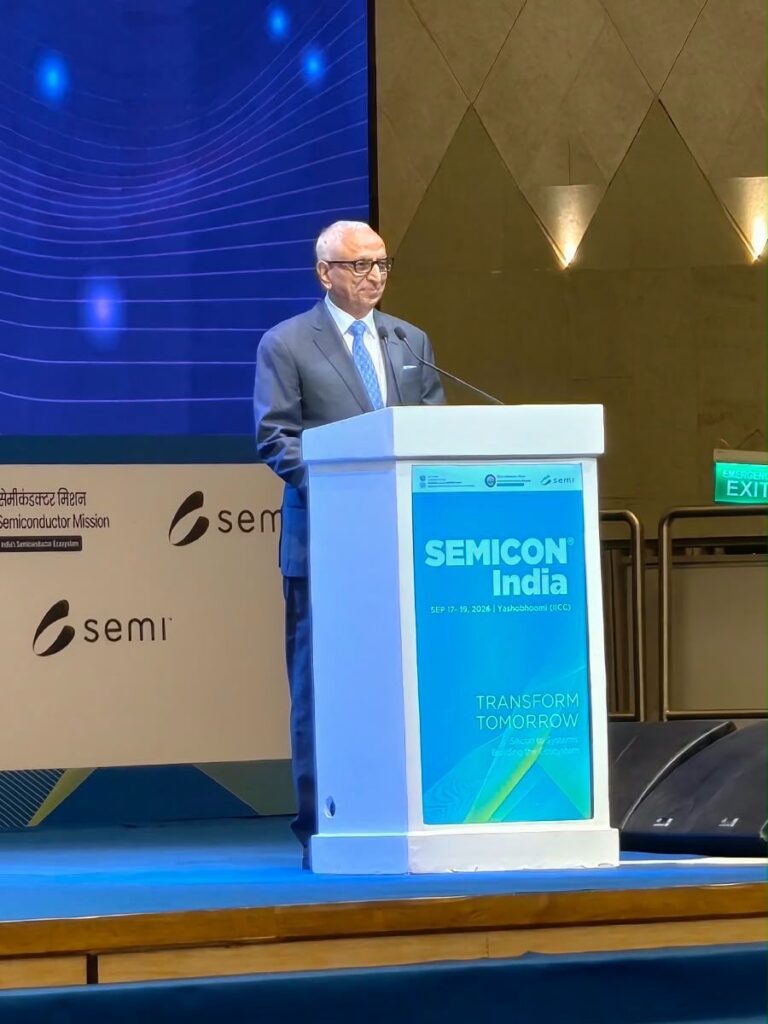
Through SEMICON India and other industry programs, SEMI has helped bring global suppliers, equipment makers, materials companies, foundries, design firms, and investors into closer alignment with India’s long-term objectives of building a globally competitive semiconductor ecosystem.
In this exclusive interview with AEI, Manocha breaks down the “Silicon to Systems” roadmap, global supply chain recalibration, and the execution milestones required to turn policy into operational yield.
AEI: SEMICON India is built around the theme “Silicon to Systems”. How does this theme align with SEMI’s vision of helping India evolve into a complete semiconductor value-chain player?
Ajit Manocha: SEMI’s core strength is bringing together every segment of the semiconductor value chain, and that is exactly what SEMICON India represents. This event features around 1,800 booths spanning materials, equipment, components, fabless companies, foundries, and other ecosystem participants. By bringing these companies together, local entrepreneurs and industry players can explore partnerships, joint ventures, and new business opportunities. The momentum is evident: Several Memoranda of Understandings (MOUs) were signed between international companies and Indian partners during the event.
Through initiatives such as Semicon 2.0, the government is not only supporting fabs but also investing in the broader ecosystem—fully consistent with both India’s objectives and SEMI’s mission.
“It took the semiconductor industry nearly 70 years to reach US$1 trillion. We now expect it to reach US$2 trillion in about five years.”
— Ajit Manocha, President and CEO, SEMI
AEI: Exhibitor participation at SEMICON India has grown substantially year-over-year. From a global supply chain perspective, what is driving this surge?
Ajit Manocha: The answer is straightforward: the semiconductor industry is growing at an extraordinary pace. It took the industry nearly 70 years to become a US$1 trillion market; we now expect it to reach US$2 trillion within about five years. As a result, companies are actively looking at where and how to expand. Global companies see several advantages in India: a large domestic market, supportive government policies, and strong commitment from policymakers. Given the scale of industry growth ahead, the world needs multiple semiconductor hubs, and India is increasingly viewed as one of the most promising among them.
AEI: As India pushes further upstream into foundry and OSAT manufacturing, where do you see the greatest execution hurdles—particularly regarding infrastructure, UPW access, and sub-tier supplier integration?
Ajit Manocha: I do not see major structural challenges or friction points. The key factors will be execution speed and execution quality. India is undertaking many of these initiatives for the first time, so maintaining execution velocity can sometimes be challenging. However, I am encouraged by the quality of implementation that we have seen so far.
AEI: How does India position itself within global supply chain diversification models like “China Plus One” or “Taiwan Plus One”?
Ajit Manocha: Given the projected growth of the semiconductor industry, the conversation is moving beyond “Plus One.” The industry will require several additional hubs. Countries such as Malaysia, Vietnam, the Philippines, and India all have important roles to play. However, India offers unique advantages: one of the largest domestic markets, a tremendous amount of engineering talent produced every year, and widespread use of English, which reduces communication barriers for international companies.
“The ‘Silicon to Systems’ vision is not just about fabs. It is about building the entire semiconductor ecosystem.”
AEI: Global government capital offsets are expanding rapidly with programs like the US $52B CHIPS Act and Europe’s €43B Chip Act. How competitive are India’s incentives when vying for global suppliers?
Ajit Manocha: The experience during COVID-19 highlighted that semiconductors are critical not only for economic growth but also for national security and technological competitiveness. As a result, many nations now regard semiconductors as strategically important. Each country will pursue policies aligned with its own objectives, priorities, and economic circumstances. Rather than comparing one region against another, it is more useful to recognize that governments worldwide are working toward similar goals of strengthening semiconductor capabilities.
AEI: Talent shortages remain a global systemic bottleneck. Can India transition from supplying global design engineering talent to supplying physical fab operations talent?
Ajit Manocha: Absolutely. India produces a very large number of STEM graduates every year. The next step is converting that raw talent into experienced semiconductor professionals through training, industry exposure, and international collaboration. We are already seeing examples of this: companies are sending engineers abroad for advanced training and bringing that expertise back. Several of the MOUs signed at SEMICON India also focus specifically on talent development.
AEI: Historically, global capital expressed caution regarding power grid stability, water logistics, and transportation infrastructure in India. Have these concerns been resolved?
Ajit Manocha: Based on my discussions with industry leaders, confidence in India’s readiness is quite strong. International executives frequently highlight the supportive policies and strong government engagement. India understands the infrastructure requirements of semiconductor manufacturing and is taking the necessary steps to ensure readiness for future investments.
AEI: Looking ahead a decade, what role will a mature Indian semiconductor sector play in the broader global tech landscape?
Ajit Manocha: By 2035, India will be recognized as one of the world’s semiconductor powerhouses. In fact, I believe the ecosystem will reach maturity well before then. By 2035, the discussion will no longer be about whether India is ready; instead, India will be regarded as one of the major semiconductor hubs alongside other leading regions around the world.
— Cristian Canoza
25 September 2026
- Share: