

ASIA ELECTRONICS INDUSTRYYOUR WINDOW TO SMART MANUFACTURING
SEMICON India 2026 Powers New Era of Chip Collaboration
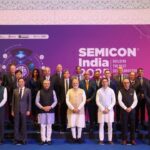
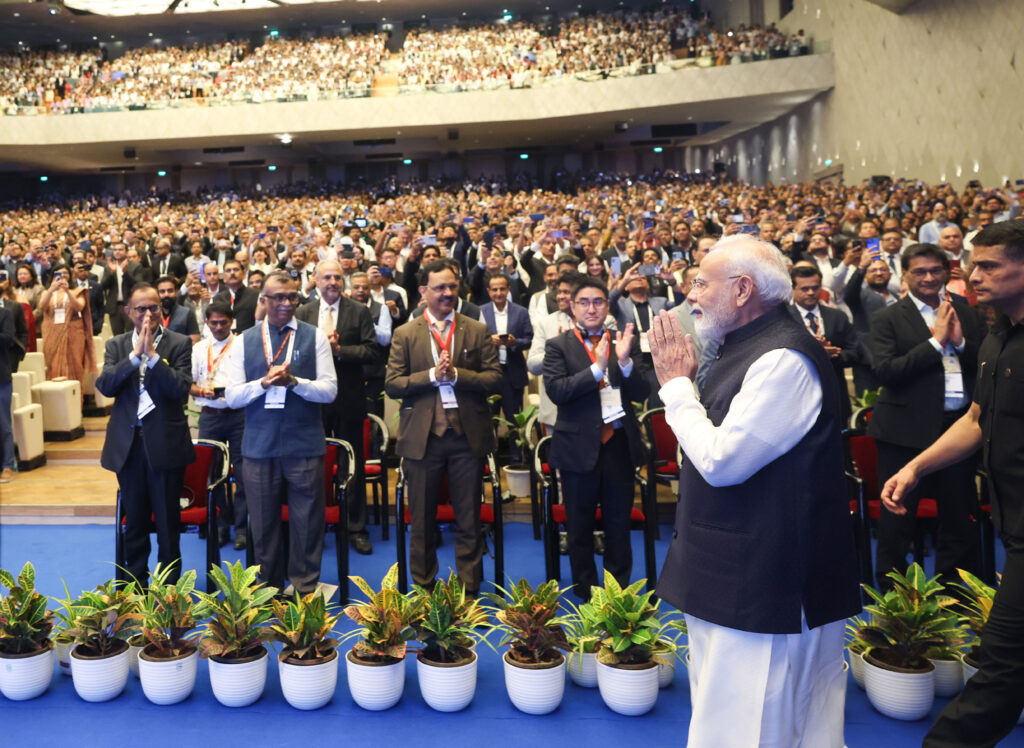
Prime Minister Nahendra Modi inaugurated SEMICON India 2026 on Thursday, positioning the country’s flagship semiconductor event as a powerful symbol of India’s growing role in the global electronics and chip manufacturing ecosystem.
Inaugurating the fifth edition of the country’s flagship semiconductor event, Modi addressed an audience that included global technology executives, investors, researchers, equipment suppliers, policymakers and chipmakers from around the world. The scale of participation and the magnitude of announcements made during the opening ceremony reflected how quickly India has moved from semiconductor ambition to semiconductor execution.
“India’s economy is growing, and on the other hand, the world’s trust in India is also increasing,” Modi said, linking the country’s economic momentum with rising investor
confidence and growing international engagement.
The event came at a pivotal time for the semiconductor sector as artificial intelligence, advanced computing, geopolitical realignment and supply chain resilience continue to reshape industry investment priorities worldwide.
Record Participation Highlights India’s Growing Strategic Importance
SEMICON India 2026 reached new milestones across nearly every metric.
SEMI President and CEO Ajit Manocha said around 600 exhibitors participated, more than doubling the approximately 250 exhibitors seen in previous editions. Around 300 international companies showcased technologies spanning semiconductor manufacturing equipment, chip design, advanced packaging, materials, testing and automation.
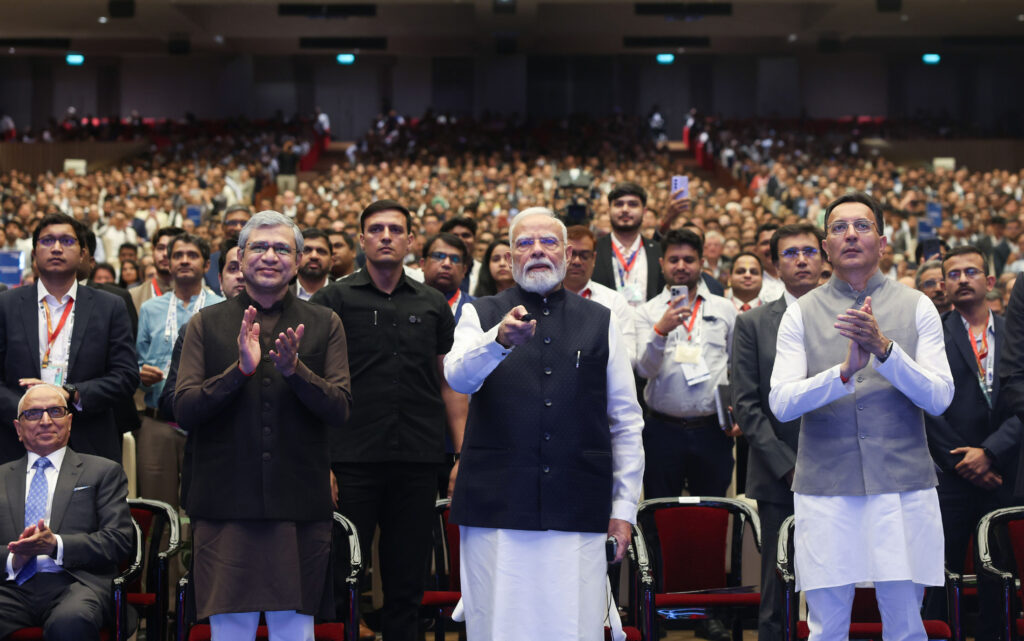
The exhibition welcomed delegations from more than 50 countries and featured six international country pavilions representing Japan, South Korea, Malaysia, the Netherlands, Singapore and Sweden. Occupying more than 15,000 square metres at the Yashobhoomi Convention Centre, the event also included 12 state government pavilions promoting semiconductor parks, incentives and manufacturing infrastructure.
In addition, over 150 international speakers participated across leadership and technology tracks, while more than 25,000 registered trade visitors, researchers and students attended the three-day gathering.
For global semiconductor companies evaluating long-term investment destinations, the strong turnout was another indication that India is becoming an increasingly important node in the international semiconductor value chain.
Applied Materials Announces US$5 Billion India Vision
The most significant investment announcement came from Applied Materials.
Dr. Prabu Raja, President of the Semiconductor Products Group, unveiled the company’s “Applied Materials India Vision 2035,” a US$5 billion long-term commitment to strengthen India’s semiconductor capabilities.
The initiative includes a 140-acre advanced semiconductor research park, plans to expand local supply chain capacity by ten times by 2035, and a commitment to double the company’s India-based R&D workforce.
The announcement reinforced confidence in India’s ability to support advanced semiconductor manufacturing and research activities at scale.
Japanese Companies Take Center Stage
Among international participants, Japanese companies emerged as some of the most influential contributors to the event.
Japan’s country pavilion attracted significant attention, reflecting the strategic importance of India-Japan cooperation in semiconductor equipment, manufacturing technologies and materials.
The most significant Japanese industry announcement came from Tokyo Electron (TEL). Toshiki Kawai, President and CEO of Tokyo Electron, announced the expansion of the company’s local technical support, field engineering and equipment maintenance infrastructure in India. The initiative is intended to support upcoming 300mm commercial wafer fabrication facilities and strengthen operational readiness as India’s semiconductor manufacturing base expands.
For semiconductor professionals, the announcement was noteworthy because advanced equipment support capabilities are essential to sustaining high-volume wafer production. TEL’s commitment therefore signals confidence in India’s manufacturing outlook as well as the growing importance of India-Japan industrial cooperation.
For industry observers, TEL’s announcement was particularly significant because equipment support infrastructure is a critical requirement for the long-term success of advanced fabs.
Global Technology Leaders Expand Talent and R&D Programs
Several major semiconductor companies focused their announcements on workforce development and capability building.
ASML announced partnerships with Indian research institutions to provide EUV and DUV lithography simulation software and specialized training. The initiative aims to create a pipeline of engineers with advanced lithography expertise.
Lam Research expanded its commitment to talent development through the rollout of its Semiverse virtual fabrication platform across Indian universities. The company expects the initiative to train more than 29,000 additional engineering students in semiconductor manufacturing processes.
Manocha announced the integration of Indian universities and technical institutions into SEMI’s Global Workforce Development Initiative. The program is designed to help address the global semiconductor talent shortage, estimated at approximately 300,000 skilled professionals.
These initiatives align closely with the Indian government’s emphasis on creating a highly skilled workforce capable of supporting long-term semiconductor growth.
Building the Complete Semiconductor Ecosystem
Beyond manufacturing equipment and workforce initiatives, several companies announced measures aimed at strengthening broader ecosystem capabilities.
Infineon Technologies revealed expanded local research and development efforts in automotive electronics, power management and IoT microcontrollers while highlighting its engagement with more than 1,200 Indian customers.
Merck’s electronics business announced investments aimed at manufacturing high-purity semiconductor chemicals, gases and materials locally to support India’s emerging fabrication sector.
Meanwhile, Celesta Capital launched the US$1 billion India Deeptech Alliance framework to support semiconductor intellectual property development, fabless startups and deep-technology ventures.
17 September 2026
- Share: