ASIA ELECTRONICS INDUSTRYYOUR WINDOW TO SMART MANUFACTURING
SEIPI Chief Backs Wafer Lab for Philippine Chip Goal
The Philippine semiconductor industry may need to develop capabilities beyond assembly, testing, and packaging if it hopes to capture greater value from the global semiconductor supply chain, according to Dan Lachica, president of the Semiconductor and Electronics Industries in the Philippines Foundation Inc. (SEIPI).
In an interview, Lachica outlined a proposal that could serve as a practical stepping stone toward more advanced semiconductor activities: the establishment of a wafer laboratory designed to build technical expertise, strengthen engineering capabilities, and support innovation-related activities within the local ecosystem.

Building Foundational Semiconductor Capabilities
Rather than advocating for immediate commercial wafer fabrication, Lachica described the concept as a measured approach focused on building foundational competencies first.
“One practical approach is to establish a wafer laboratory as a proof of concept, with the initial goal of developing foundational expertise in wafer processing, IC Design prototyping, and experimental device fabrication.”
According to Lachica, the facility could support research, process development, prototyping, and testing activities while helping engineers and researchers gain hands-on experience with semiconductor technologies. The initiative could also provide a platform for closer collaboration between industry and academic institutions, helping bridge the gap between research, workforce development, and manufacturing requirements.
Moving Beyond Assembly and Test
The proposal comes as industry leaders increasingly examine ways for the Philippines to participate in higher-value segments of the semiconductor value chain. While the country has built a strong reputation in assembly, testing, and packaging operations, Lachica believes long-term competitiveness will require broader capabilities in engineering, product development, and technology creation.
“The laboratory could serve as a platform for research, process development, and the prototyping and testing of semiconductor devices, enabling Filipino engineers and researchers to translate design concepts into physical prototypes and validate new technologies while retaining the IP.”
The initiative is also closely linked to talent development. Semiconductor fabrication-related skills require specialized training that extends beyond conventional manufacturing operations. A wafer laboratory could provide engineers, researchers, and students with practical exposure to semiconductor processes while strengthening the country’s technical talent base.
ASEF and PSECE Spotlight Higher-Value Industry Growth
Discussions during the recently concluded ASEAN Semiconductor and Electronics Forum (ASEF) 2026 and Philippine Semiconductor and Electronics Convention and Exhibition (PSECE) 2026 highlighted the importance of strengthening ASEAN collaboration, improving supply-chain resilience, attracting higher-value investments, and expanding participation in advanced semiconductor activities.
Industry leaders attending the events emphasized that future competitiveness will depend not only on manufacturing capacity but also on innovation, engineering expertise, research capabilities, and the ability to support emerging semiconductor technologies. The conversations reflected a broader regional trend toward developing deeper semiconductor ecosystems that extend beyond production and into technology development.
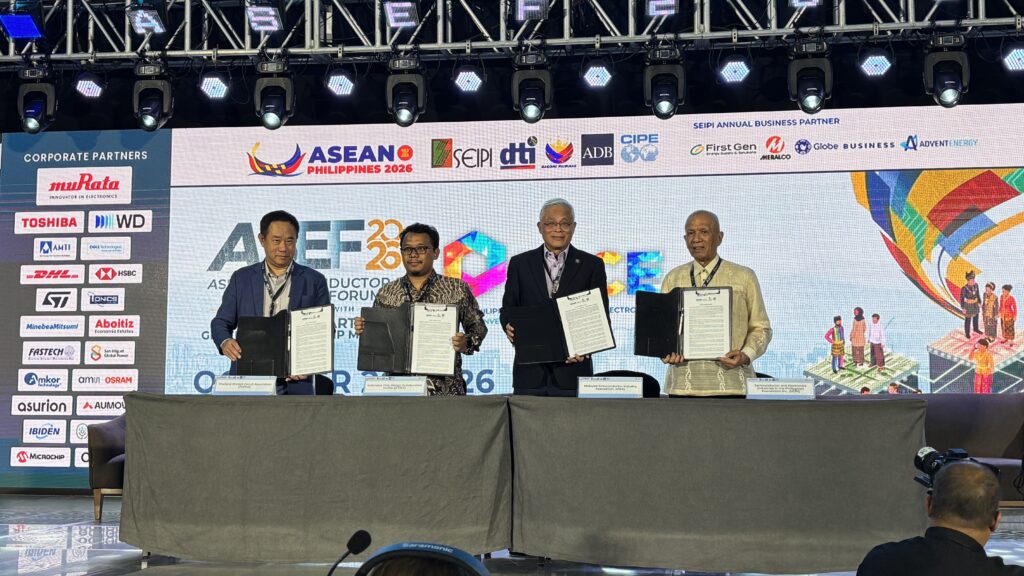
Against that backdrop, a wafer laboratory could provide a practical mechanism for advancing those objectives. While not equivalent to commercial wafer fabrication, the facility could help establish the technical foundation needed for future activities in prototyping, process development, research, and semiconductor innovation.
Long-Term Industry Strategy
For Lachica, the broader objective is not simply increasing production output but building a more resilient and capable semiconductor ecosystem.
“Our goal should not simply be to manufacture more electronics, but to progressively build the expertise, technology, prototyping, and innovation capability needed for the Philippines to capture greater value and play a more strategic, competitive, and sustainable role in the global semiconductor industry.”
Cristian Canoza
26 November 2026
- Share: