
ASIA ELECTRONICS INDUSTRYYOUR WINDOW TO SMART MANUFACTURING
ASEAN Collaboration Takes Center Stage at PSECE 2026
The Philippines is using its 2026 ASEAN chairmanship to elevate regional semiconductor cooperation through PSECE 2026, positioning the country’s flagship electronics industry event as a platform for investment, supply chain development, workforce readiness, and long-term ASEAN competitiveness.
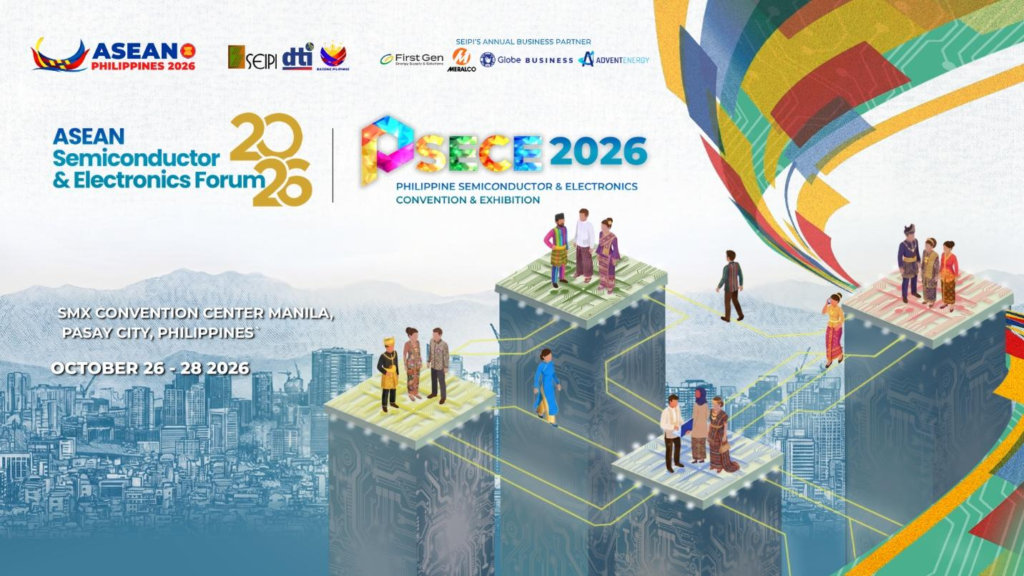
The ASEAN-Integrated Philippine Semiconductor and Electronics Convention and Exhibition (PSECE) 2026, scheduled for Oct. 26-28 at the SMX Convention Center Manila, reflects a broader effort to strengthen collaboration among semiconductor and electronics stakeholders across Southeast Asia at a time when manufacturers are seeking more resilient and sustainable production ecosystems.
For industry executives, the significance extends beyond the annual convention itself. Organizers are framing the event as an opportunity to align regional priorities around talent development, infrastructure, investment attraction, technology adoption, and supply chain resilience.
“This year’s PSECE is an opportunity to demonstrate that the Philippines is not just a participant in the global semiconductor and electronics supply chain, but a partner capable of contributing to its next phase of growth,” said Dr. Dan Lachica, president of the Semiconductor and Electronics Industries in the Philippines Foundation Inc. (SEIPI), in a pre-PSECE 2026 interview.

The expanded ASEAN dimension will be highlighted through the ASEAN Semiconductor and Electronics Forum (ASEF) 2026, which will be held alongside the convention on Oct. 26. Organized under the theme, “One ASEAN, One Semiconductor Future: Building Resilient and Sustainable Global Value Chains,” the forum will bring together government officials, industry leaders, technology providers, and policymakers to discuss the region’s evolving role in the global electronics ecosystem.
Focus on Talent, Infrastructure and Investment
According to the ASEF program, discussions will center on three strategic priorities: strengthening ASEAN integration and competitiveness, developing future-ready capabilities and innovation, and advancing resilient and sustainable growth across the region’s semiconductor and electronics sector.
Sessions are expected to address workforce development, industry-academe collaboration, regional supply chains, investment opportunities, economic infrastructure, renewable energy adoption, ESG initiatives, and decarbonized manufacturing. The agenda also includes discussions on semiconductor investments linked to the Luzon Economic Corridor and efforts to position ASEAN as a globally competitive manufacturing hub.
Lachica said the forum’s objectives extend beyond policy discussions.
“With the ASEAN Semiconductor & Electronics Forum held alongside the convention, we aim to strengthen regional cooperation, connect businesses with new technology providers and customers, and open opportunities for investment and industry partnerships.”
That emphasis reflects a growing industry focus on regional ecosystems capable of supporting evolving manufacturing requirements while creating new commercial opportunities for suppliers, manufacturers, and investors.
Moving Beyond Networking
Another notable element of ASEF 2026 is the planned signing of a joint communiqué involving semiconductor and electronics industry organizations and partners from several ASEAN member states, including the Philippines, Singapore, Malaysia, Thailand, and Indonesia. The initiative is intended to reinforce industry cooperation across the region.
Beyond the conference program, organizers are positioning the exhibition component as a venue for practical business engagement.
“The exhibition provides a venue for companies to showcase technologies, manufacturing capabilities, and solutions that can help address the evolving needs of the industry,” Lachica said.
PSECE 2026 will also feature executive forums, technical symposiums, international pavilions, networking programs, academic participation, and a large-scale exhibition covering semiconductor, electronics manufacturing, automation, and related technologies.
For SEIPI, success will ultimately be measured by outcomes rather than attendance.
“Ultimately, we want PSECE to deliver more than visibility,” Lachica said. “We want it to generate meaningful business connections, encourage new investments, and strengthen confidence in the Philippines as a competitive and reliable electronics manufacturing hub.”
As ASEAN governments and industries place increasing emphasis on resilient value chains and sustainable growth, PSECE 2026 is positioning itself as a venue where regional priorities can translate into partnerships, investment opportunities, and deeper semiconductor collaboration.
25 October 2026
- Share: