



ASIA ELECTRONICS INDUSTRYYOUR WINDOW TO SMART MANUFACTURING
AMD to Surge Taiwan’s AI Grit With New Investments
Advanced Micro Devices (AMD) has announced more than US$10 billion in investments across Taiwan’s semiconductor ecosystem to accelerate the development of next-generation artificial intelligence (AI) infrastructure. Accordingly, the move aims to expand strategic partnerships and increase advanced packaging production capacity needed to meet growing global demand for AI computing.
The company said the investments will support innovations across silicon, packaging, and manufacturing technologies, enabling improved performance, higher efficiency, and faster deployment of AI systems.
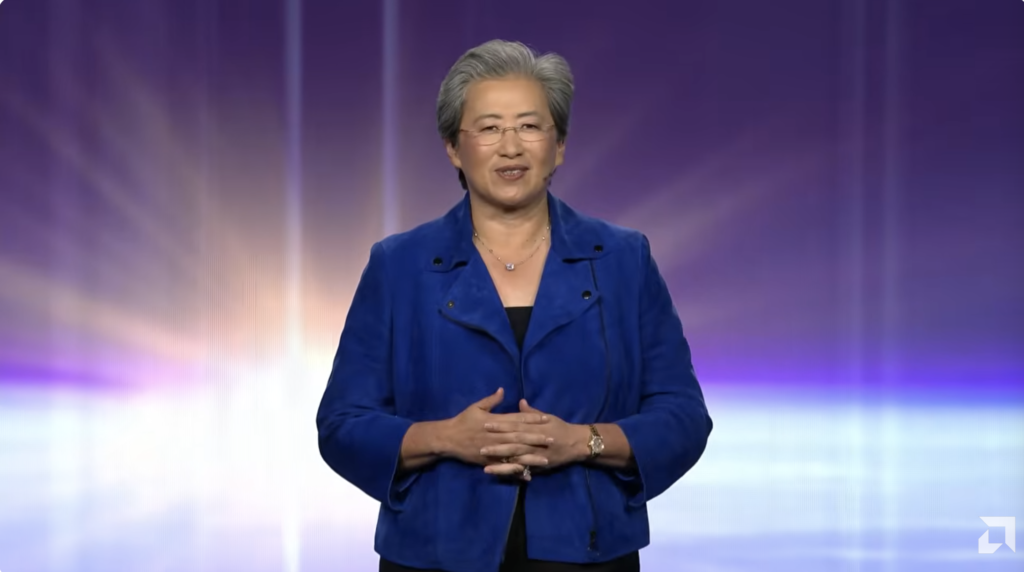
“As AI adoption accelerates, our global customers are rapidly scaling AI infrastructure to meet growing compute demand,” said Dr. Lisa Su, Chair and CEO, AMD. “By combining AMD leadership in high-performance computing with the Taiwan ecosystem and our strategic global partners, we are enabling integrated, rack-scale AI infrastructure that helps customers accelerate deployment of next-generation AI systems.”
Focus on Advanced Packaging, Partnerships
A key pillar of AMD’s strategy is scaling advanced packaging capabilities, particularly through collaboration with Taiwan-based partners such as ASE and SPIL. These partnerships are focused on developing wafer-based 2.5D bridge interconnect technology, designed to increase bandwidth while improving power efficiency.
AMD noted that the technology will support its upcoming sixth-generation EPYC processors, codenamed “Venice,” which are expected to deliver improved performance per watt while meeting real-world power and cooling constraints.
The company also highlighted progress with panel-based innovations through collaboration with PTI, including qualification of a 2.5D panel-based interconnect approach aimed at enabling high-bandwidth connections at scale. [amd.com]
Enabling Next-Generation AI Systems
AMD’s investment initiative is intended to help customers build and deploy more efficient AI systems as demand for compute power continues to rise. According to the company, its ecosystem approach combines hardware innovation with manufacturing scale to deliver integrated, rack-level infrastructure solutions.
The company is also advancing its Helios rack-scale platform, which integrates “Venice” CPUs with AMD Instinct MI450X GPUs. These systems are expected to support large-scale deployments measured in multiple gigawatts beginning in the second half of 2026.
Responding to Accelerating AI Demand
AMD and its ecosystem partners are applying these innovations to support deployment of the AMD Helios rack-scale platform in the second half of 2026, marking a major step toward production-ready AI infrastructure.
Leading ODM partners including Sanmina, Wiwynn, Wistron, and Inventec are helping to build AMD Helios-based systems powered by AMD Instinct MI450X GPUs, 6th Gen AMD EPYC CPUs, advanced networking solutions and the AMD ROCm open software stack, helping scale the platform from design to high-volume manufacturing.
The announcement builds on AMD’s existing strengths in chiplet architectures, high-bandwidth memory integration, and 3D hybrid bonding, reinforcing its position in the competitive market for AI infrastructure.
21 May 2026
- Share: