



ASIA ELECTRONICS INDUSTRYYOUR WINDOW TO SMART MANUFACTURING
Semicon 2.0 Powers India’s Chip Ecosystem Expansion
India is entering the next phase of its semiconductor strategy with the launch of Semicon 2.0, an expanded initiative designed to strengthen every layer of the semiconductor value chain. Backed by investment commitments of around ₹1 lakh crore (approximately USD 11-12 billion), the program is expected to generate nearly 100,000 jobs while accelerating the country’s ambitions to become a trusted global semiconductor hub.
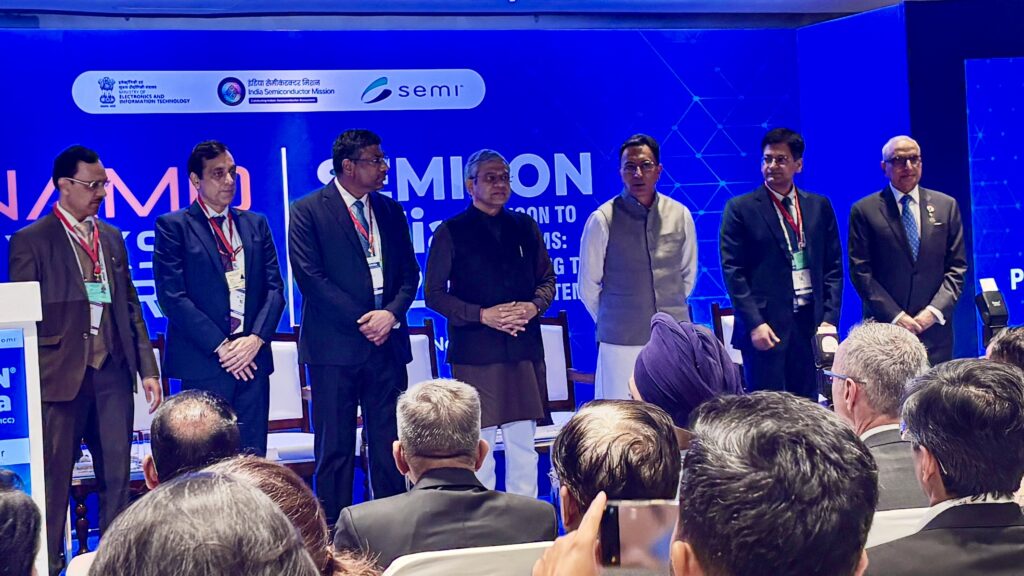
Speaking in a press conference at SEMICON India 2026 in New Delhi, Union Minister for Electronics and Information Technology Ashwini Vaishnaw outlined a broader vision for the sector. While the first phase focused on establishing the industry’s foundation, the new phase aims to build a comprehensive ecosystem spanning design, equipment, fabrication, advanced packaging, research and workforce development.
“Semicon 2.0 is aimed at putting the wider ecosystem in place and scaling capabilities across the semiconductor value chain,” Vaishnaw said.
Strong Industry Confidence
The government has already received investment commitments worth around ₹1 lakh crore under the Semicon 2.0 framework. These investments are expected to materialize over the next two to three years as companies complete internal approval processes.
The commitments highlight growing confidence in India’s semiconductor ecosystem. Moreover, they are expected to create significant economic activity while generating close to 100,000 employment opportunities across design, manufacturing, packaging and supply-chain operations.
Industry interest is also being driven by the increasing need for resilient and diversified global semiconductor supply chains. As a result, India is attracting attention from companies seeking alternative manufacturing and sourcing destinations.
Six Strategic Pillars Drive Ecosystem Development
At the core of Semicon 2.0 is a six-pillar strategy designed to deepen India’s capabilities across the semiconductor sector.
The first pillar focuses on expanding the design ecosystem. The government plans to support 200 semiconductor design start-ups through funding access, venture capital support, customer discovery initiatives and stronger intellectual property protection. The strategy also aims to help companies move beyond chip design and into systems design.
The second pillar targets machines and materials. The government expects India’s established engineering talent and growing precision manufacturing capabilities to attract global equipment manufacturers for both design and production activities.
The third pillar centers on fabrication facilities, including display, memory, silicon, compound and logic fabs. According to the minister, global interest in establishing semiconductor manufacturing operations in India continues to increase.
Meanwhile, advanced packaging forms the fourth pillar. As packaging becomes essential for performance optimization and efficiency improvements, India plans to develop specialized capabilities in this rapidly growing segment.
The fifth pillar promotes applied research and development through collaboration among industry, academia and government institutions. This approach aims to deliver commercially relevant technologies and measurable outcomes.
Finally, the sixth pillar focuses on talent development. Around 400 universities and institutions are already participating in semiconductor chip-design education initiatives. In addition, the government plans to train 100,000 technicians over the next five years through partnerships with industry and international organizations, including Taiwan’s ITRI.
Building a Competitive and Resilient Supply Chain
A key objective of Semicon 2.0 is to move beyond standalone manufacturing facilities and create a self-sustaining semiconductor ecosystem.
The government is prioritizing capabilities in capital equipment, materials, gases, chemicals, precision manufacturing and related supply chains. These supporting industries are expected to strengthen resilience and improve long-term competitiveness.
“Global competitiveness in terms of quality and cost has remained a key consideration from the selection of semiconductor projects through construction and production,” Vaishnaw said.
The minister added that semiconductor facilities already in production are competing in global markets and securing customer demand, while additional projects continue to scale manufacturing capacity.
Industry Partnerships Strengthen the Value Chain
SEMICON India 2026 also showcased new industry collaborations through 11 memorandums of understanding and five major announcements.
Notable agreements involved Tata Electronics and international partners including Nexperia, Fujifilm, JSR Corporation and BESI Singapore. Additional partnerships focused on semiconductor materials, wafer manufacturing, advanced packaging, supply-chain localization and talent development.
The event also featured the launch of a semiconductor education course by India Semiconductor Mission and Intel India, the announcement of six ChipIN Regional Centres and new initiatives to strengthen workforce readiness.
With participation from more than 600 companies and representatives from 52 countries, SEMICON India 2026 underlined India’s growing role in the global semiconductor landscape. Through Semicon 2.0, the country is now pursuing a long-term strategy aimed at building a complete, resilient and globally competitive semiconductor ecosystem.
17 September 2026
- Share: