ASIA ELECTRONICS INDUSTRYYOUR WINDOW TO SMART MANUFACTURING
Bosch Repositions Chip Business for AI Growth
Bosch is creating a dedicated semiconductor business division as it seeks to accelerate growth beyond its automotive roots and capitalize on rising demand from AI, robotics and other emerging technology markets.
The company said it will bundle its semiconductor activities into a standalone Semiconductors business division effective January 1, 2028. The restructuring is designed to sharpen customer focus, expand market reach and support Bosch’s goal of generating €5 billion in semiconductor revenue by 2030.

The move comes as demand for semiconductors and sensors expands across industries. Bosch pointed to growing requirements from artificial intelligence infrastructure, robotics and data-center applications, citing forecasts that generative AI alone could require millions of additional semiconductor wafers annually by the end of the decade.
“By establishing our own division, we are opening a new chapter in our more than 60-year semiconductor history. In the future, we will be able to tailor our services even better to our customers’ needs – in the automotive sector, in consumer electronics, and beyond,” said Erik Rein, Board Member Bosch Mobility Electronics responsible for the company’s global semiconductor business.
Expanding Beyond Automotive
While automotive applications remain the foundation of Bosch’s semiconductor operations, the company said the new structure will enable broader commercialization of its technologies across multiple industries.
The future division will be built around a portfolio that includes MEMS sensors, silicon carbide (SiC) power semiconductors, automotive integrated circuits, radar system-on-chips, ultrasonic ICs, safety ICs, MEMS foundry services and quantum sensing technologies.
Robotics was highlighted as one area where Bosch sees opportunities to leverage both semiconductor capabilities and application expertise. At the same time, the company plans to increasingly open manufacturing capacity to external partners and strategically expand its foundry business.
“Our customers can count on Bosch’s long-term strategic commitment to semiconductors and benefit from the best of both worlds: the clear focus of a specialized semiconductor supplier backed by Bosch’s technology expertise, quality, and long-term reliability,” Rein said.
Manufacturing Network Supports Growth Strategy
The new division will operate across approximately 40 development and manufacturing sites worldwide, supporting regional customer engagement and supply-chain resilience.
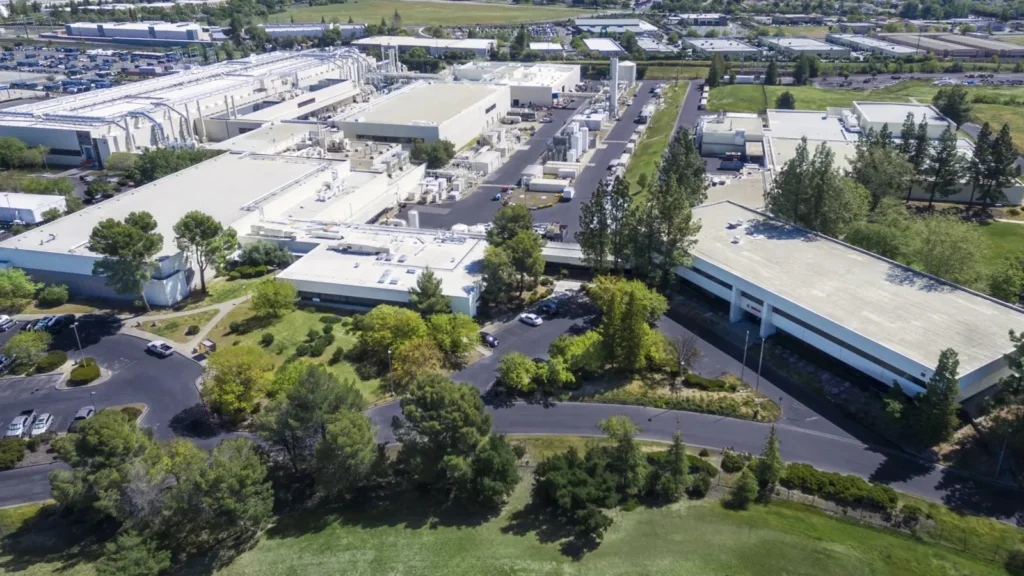
Bosch said recent investments have strengthened its manufacturing footprint, including approximately €3 billion invested in its Dresden and Reutlingen facilities in Germany. In the United States, the company is converting its Roseville, California, site for production of specialized SiC chips through investments of roughly $2 billion. Bosch also plans further expansion of its semiconductor test center in Penang, Malaysia, by the middle of the next decade.
The restructuring underscores Bosch’s intention to combine the operational focus of a dedicated chip supplier with the scale, application expertise and manufacturing resources of a global industrial technology company as semiconductor demand broadens across emerging technology markets.
04 November 2026
- Share: