ASIA ELECTRONICS INDUSTRYYOUR WINDOW TO SMART MANUFACTURING
Yokogawa Drives AI-Ready Semiconductor Factories
As semiconductor manufacturers face rising pressure to improve productivity, resilience, energy efficiency and operational agility, Yokogawa is advocating a broader transformation strategy that extends beyond conventional automation toward integrated, data-driven and increasingly autonomous manufacturing operations.
In an interview with AEI, Buddy Bocarile, Assistant Vice President and Head of Energy & Sustainability Business Unit at Yokogawa Philippines said the next battleground in semiconductor manufacturing may not be equipment capacity alone. It will also include how effectively factories connect operational data, deploy artificial intelligence, and transform fragmented operations into intelligent, increasingly autonomous production environments.
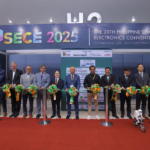
At the recent PSECE 2026, the company outlined an approach that combines operational technology (OT), information technology (IT), artificial intelligence, asset intelligence, cybersecurity and energy management into a unified operational framework designed to help manufacturers compete in markets increasingly shaped by AI, high-performance computing, data centers, electric vehicles and advanced communications.
“…companies need to go beyond stand-alone automation and individual pieces of equipment. They need greater visibility across their operations and the ability to turn operational data into practical insights and better business decisions.” – Buddy Bocarile, Assistant Vice President and Head of Energy & Sustainability Business Unit at Yokogawa Philippines

“As manufacturing environments become more complex, companies need to go beyond stand-alone automation and individual pieces of equipment. They need greater visibility across their operations and the ability to turn operational data into practical insights and better business decisions.”
The shift comes at a time when many semiconductor and electronics facilities continue to operate a mix of legacy and modern systems from multiple vendors. Replacing those systems outright is often impractical, making data integration and incremental modernization an increasingly attractive strategy.
AI Moves Closer to the Factory Floor
Bocarile said many manufacturers are eager to embrace AI but often overlook a more fundamental requirement: trusted operational data.
“Reliable, trusted operational data must come before higher-level analytics and AI.”
In his view, the journey toward intelligent manufacturing follows a progression. Organizations first establish visibility across operations, then move toward monitoring, predictive insights and optimization before introducing more autonomous capabilities. The goal is not automation for its own sake, but faster decision-making, improved maintenance, lower downtime and more efficient resource utilization.
That evolution is becoming increasingly important as manufacturers respond to supply-chain diversification opportunities and growing investment across Asia’s semiconductor ecosystem.
Central to Industrial Operations
One of the strongest themes emerging from the discussion was the changing role of AI inside industrial operations.
Rather than viewing AI as a replacement for people, Bocarile sees it as a tool for addressing workforce constraints while improving operational performance.
“At Yokogawa, we believe using AI is not to replace human, but to address areas of manpower shortages and improve business efficiency.”
The company is applying AI to areas such as anomaly detection, process stabilization, predictive analysis, optimization and operator decision support. Digital twins and advanced analytics are also being used to help manufacturers evaluate operating scenarios before implementing changes on live production systems.
“Autonomy does not mean removing people. Automation and AI can support routine activities while personnel focus on engineering judgment, exceptions, continuous improvement, and higher-value decisions.”
Even as AI capabilities advance, Bocarile emphasized that people remain central to industrial operations.
“Autonomy does not mean removing people. Automation and AI can support routine activities while personnel focus on engineering judgment, exceptions, continuous improvement, and higher-value decisions.”
Technologies Enabling the Transition
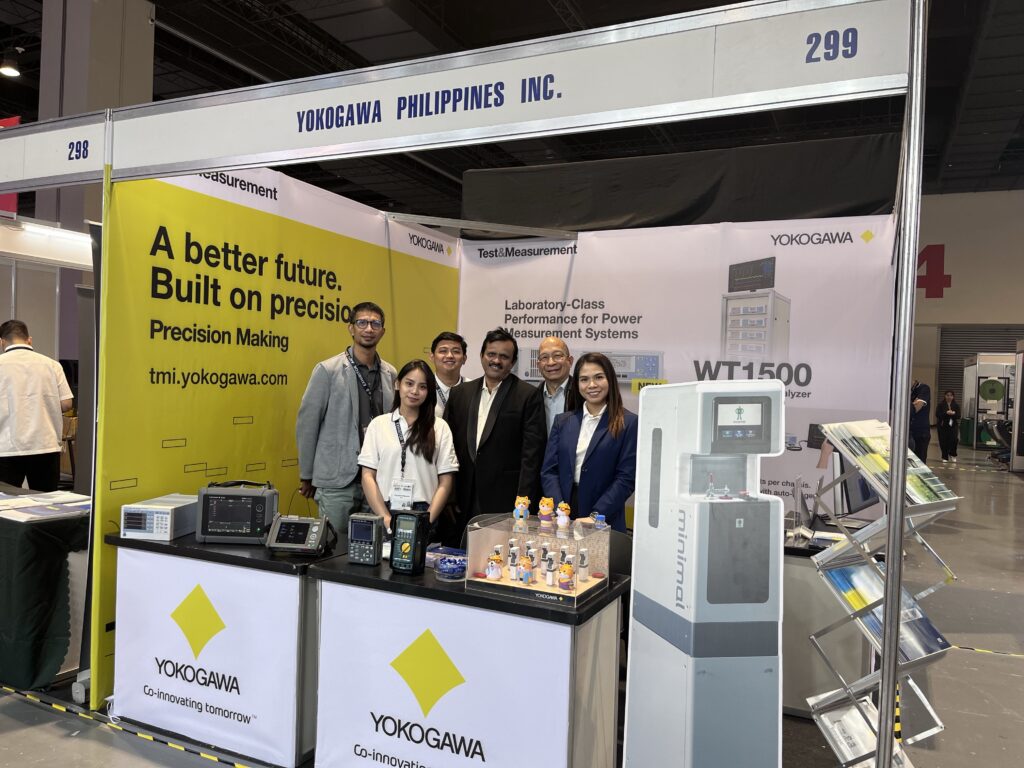
The broader transformation strategy is supported by a portfolio of technologies that Yokogawa is showcasing at PSECE 2026.
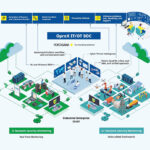
Among them is the Collaborative Information Server (CI Server), designed to connect OT and IT environments and provide greater visibility across manufacturing operations. The company’s Asset Health Insights (AHI) platform enables cloud-based asset monitoring and supports proactive maintenance initiatives, while Visual MESA helps manufacturers analyze and optimize energy consumption as sustainability and energy-efficiency targets become increasingly important.
For engineering and validation teams, Yokogawa is also highlighting precision power analyzers, power meters, mixed-signal oscilloscopes, ScopeCorders, optical spectrum analyzers and source-measure instruments used in semiconductor testing, characterization and production environments.
At the advanced end of the spectrum is Factorial Kernel Dynamic Policy Programming (FKDPP), the company’s AI-based control technology intended to help manage complex industrial processes that can be difficult to address using conventional control approaches alone.
Taken together, the technologies represent more than a collection of products. They support a broader vision outlined by Bocarile – a future in which semiconductor and electronics manufacturers leverage connected data, AI, cybersecurity, asset intelligence and energy management to build factories that are not only more automated, but increasingly self-optimizing, resilient and autonomous.
— Cristian Canoza
03 November 2026
- Share: