

ASIA ELECTRONICS INDUSTRYYOUR WINDOW TO SMART MANUFACTURING
Trymax Targets AI Boom with Advanced Process Tools
As artificial intelligence accelerates investment across data centers and advanced packaging, chipmakers require specialized solutions that adapt seamlessly to new materials, shifting wafer formats, and complex device architectures.
For Trymax Semiconductor Equipment, a Netherlands-based chip manufacturing equipment specialist, these macro shifts are creating significant expansion opportunities. The company is seeing strong momentum in optoelectronics—particularly indium phosphide (InP)-based applications supporting optical communications for AI data centers—alongside expanding demand in memory manufacturing, electric vehicle (EV) power electronics, and heterogeneous integration.
To support these sectors, Trymax’s R&D priorities focus on inductively coupled plasma (ICP) etching for isotropic applications and microwave-based etching for Bosch polymer cleaning and sidewall smoothening. Rather than competing with mega-OEMs on portfolio breadth, Trymax emphasizes close customer collaboration during process development and production scale-up.
Supported by the financial backing of Accuron Technologies, Trymax accelerates its R&D while maintaining its independent product strategy and customer relationships. Geographically, regional demand varies: EV power electronics drives activity in Asia, while AI and data center investments shape opportunities in the United States. As the company explores localized domestic manufacturing in China, it applies a unified global equipment standard, process transparency, and compliance framework to safeguard customer IP across all regions.
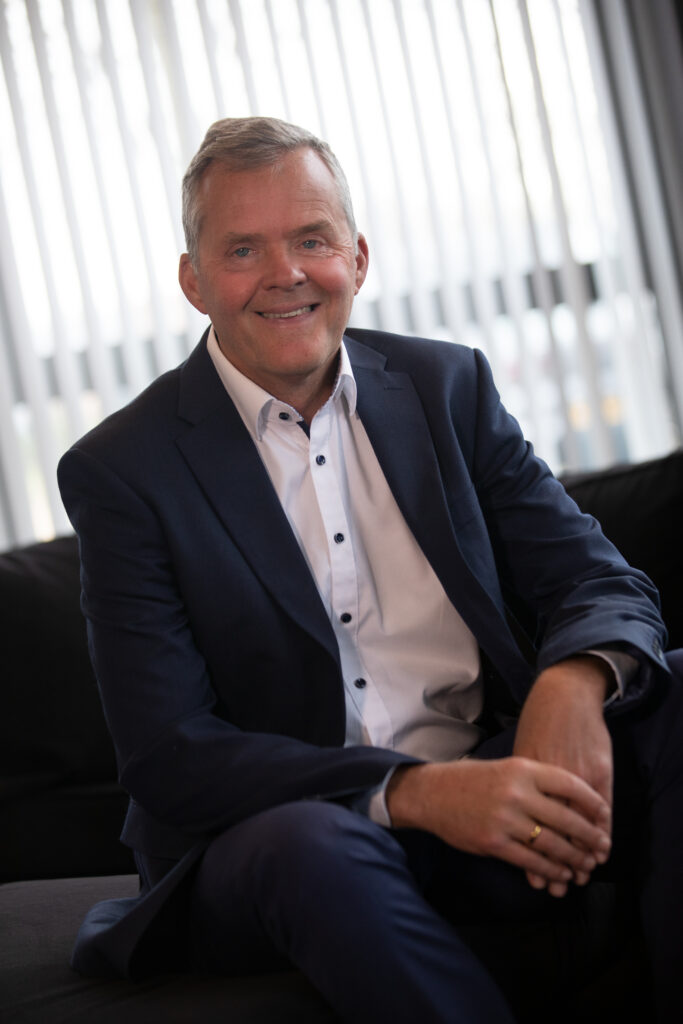
In this interview with AEI, Peter Dijkstra, Chief Commercial Officer (CCO), Trymax Semiconductor Equipment, discusses the trends reshaping semiconductor manufacturing, Trymax’s role in compound semiconductors, and the milestones defining its growth roadmap.
Strategic Differentiation & Core Technology Priorities
AEI: What differentiates Trymax from larger semiconductor equipment suppliers?
Dijkstra: Trymax has always been willing to adapt. Where larger OEMs operate on fixed product configurations, Trymax engages early in the customer’s development cycle, adjusting hardware and software to specific process requirements. This extends to joint process recipe development, where we draw on an extensive internal process database while learning from each customer’s technology roadmap. Major fabless companies work with Trymax equipment on this basis.
AEI: What technology priorities are driving Trymax’s next growth phase?
Dijkstra: Trymax is directing its R&D investment toward inductively coupled plasma (ICP) etching for isotropic applications, alongside microwave-based etching for Bosch polymer cleaning and sidewall smoothening.
On the application side, the strongest pull is coming from the optoelectronics segment, specifically indium phosphide (InP), driven by growing demand for optical communications infrastructure supporting AI and data center buildout. Ashing and descum for the memory market represent a further growth vector. These priorities reflect a deliberate move toward compound semiconductor applications.
“The result is a relationship dynamic more like a development partner than a vendor, deepening as customers scale rather than being replaced once volume requirements grow.”
— Peter Dijkstra, Chief Commercial Officer
Applications: AI, Advanced Packaging & High-Value Yields
AEI: How are AI, advanced packaging and heterogeneous integration reshaping customer requirements?
Dijkstra: The most significant shift in customer conversations over the past two to three years has been the rise of optoelectronics for AI and data center applications, where optical communication is emerging as a critical enabler.
Customers in this space are qualifying Trymax equipment for plasma cleaning and surface activation processes that underpin heterogeneous integration. AI-driven demand has also extended into the storage market, where Trymax has seen qualification engagements translate into orders.
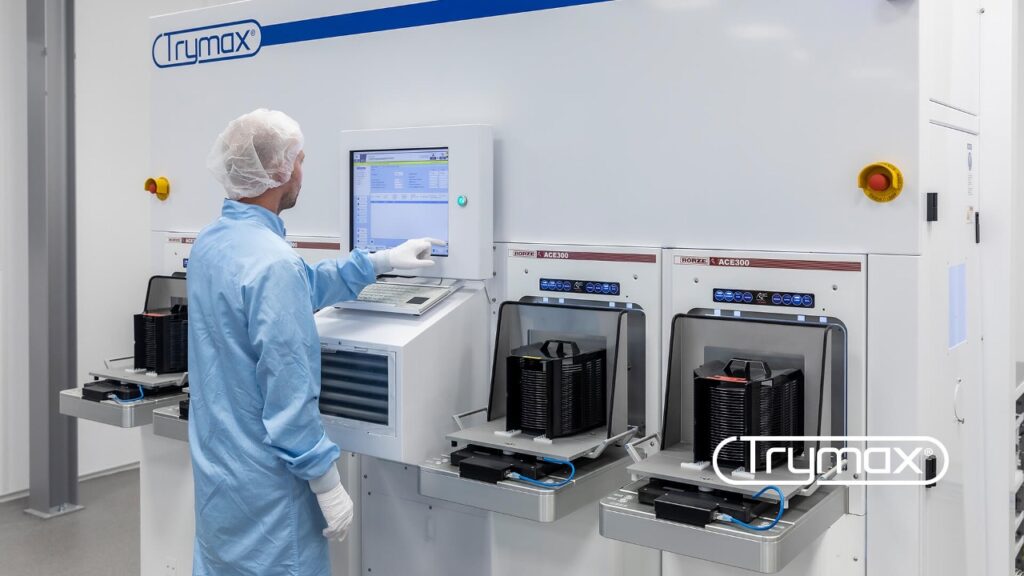
The common thread across these requests is the need for processes that can accommodate diverse substrate materials and wafer sizes without mechanical reconfiguration, a flexibility that is built into our NEO platform architecture.
AEI: How does Trymax help customers improve yield, productivity and ROI in high-value applications?
Dijkstra: Trymax approaches high-value applications as a co-development partner rather than a standard equipment supplier, working with customers to develop dedicated hardware, software and process recipes tailored to their specific requirements.
A concrete example of this flexibility is in the InP space, where customers scaling from 3-inch to 4-inch and 6-inch wafers can run all three diameters on the same Trymax tool without mechanical adjustment.
For EV power electronics, the value proposition centers on high equipment uptime and low cost of ownership. Several major German manufacturers have standardized on Trymax across their production lines for these reasons, including wafer-size scalability, accessible maintenance and consistent reliability at volume.
Our Americas business is seeing similar momentum, most recently with a purchase order received from Applied Optoelectronics, Inc. (Texas, United States), a further signal of Trymax’s growing traction in high-reliability production environments.
Execution, Supply Chain & Global Market Dynamics
AEI: How does Trymax differentiate itself in responsiveness and customer support?
Dijkstra: Trymax structures its supply chain to absorb demand variability before it becomes a customer problem. Where possible, the company establishes volume purchase agreements that allow both parties to align on forward requirements, enabling Trymax to procure materials ahead of purchase orders and pre-build tools to the point of final configuration.
This means that when an urgent order comes in, lead time is reduced to the customization stage rather than starting from scratch. Typical delivery timelines run significantly faster than standard industry lead times. This protects customers from the supply-chain disruptions, a recurring challenge across the industry.
AEI: How do opportunities differ across Asia and the United States?
Dijkstra: Regional demand patterns vary significantly, and Trymax calibrates its approach accordingly through local offices across its key markets.
In Asia, the most active markets currently are China, Japan and Southeast Asia, with EV power electronics as the dominant application driver. In the United States, activity is primarily shaped by AI and data center demand beyond CHIPS Act capacity expansions alone.
The same core platform supports both, though the specific process priorities, and therefore the application engineering conversation, differ by region. Our ability to serve Western multinationals and Asian manufacturers to the same equipment standards is a function of our position as a European supplier operating under consistent quality and compliance frameworks.
AEI: What enabled Trymax to become a leading supplier in China’s SiC market?
Dijkstra:Trymax’s position in the Chinese SiC segment grew from its standing as the preferred supplier to major European semiconductor manufacturers, companies whose process standards and equipment requirements set a high bar.
That credibility, combined with our process depth and equipment reliability, translated directly into wins in China. The validation works in both directions: Trymax’s China SiC installed base now reinforces its case with customers in the United States and Europe evaluating the same applications.
Future Outlook
AEI: What will define success for Trymax over the next three to five years?
Dijkstra: Our ambitions for the next three to five years are grounded in the model that the company has built.
The priority is continued growth through fostering deeper customer relationships, bringing new processes to market that allow customers to differentiate themselves technically, and sustaining the close collaboration between equipment supply and process development that defines how the company operates.
Trymax’s goal is to be the partner of choice for manufacturers who need a specialist with reliable, high-uptime equipment, not to compete with large OEMs on volume and breadth, but to go deeper where they do not and stay engaged long after installation.
Cristian Canoza
13 October 2026
- Share: