ASIA ELECTRONICS INDUSTRYYOUR WINDOW TO SMART MANUFACTURING
Singapore Backs Yokogawa Grid Innovation Program
Yokogawa Engineering Asia has secured a S$4.2 million award under Singapore’s Energy Grid 3.0 Grant Call, positioning industrial facilities and distributed energy assets as potential contributors to future electricity grid stability rather than simply end users of power.
The project arrives as Singapore prepares for a more decentralized and renewable-powered energy system. Led by Yokogawa in collaboration with the National University of Singapore, Singapore Institute of Technology, and Rexus Bioenergy, the initiative will explore how industrial and distributed energy assets can provide services that support grid resilience, decarbonization, and economic efficiency.
Expanding Industry’s Role in Grid Operations
A key objective is to evaluate how industrial sites can participate more actively in maintaining electricity system reliability while continuing their primary operating functions.
According to the company, the project will investigate how existing process manufacturing facilities and modern infrastructure such as data centers can contribute critical support services to the power grid.
“As Singapore integrates more renewable energy into our power system, developing new solutions to maintain grid stability will become increasingly important,” said Eugene Toh, Assistant Chief Executive (Energy Technologies) of Singapore’s Energy Market Authority. “The Energy Grid 3.0 Grant Call supports research and innovation to address such emerging challenges.”
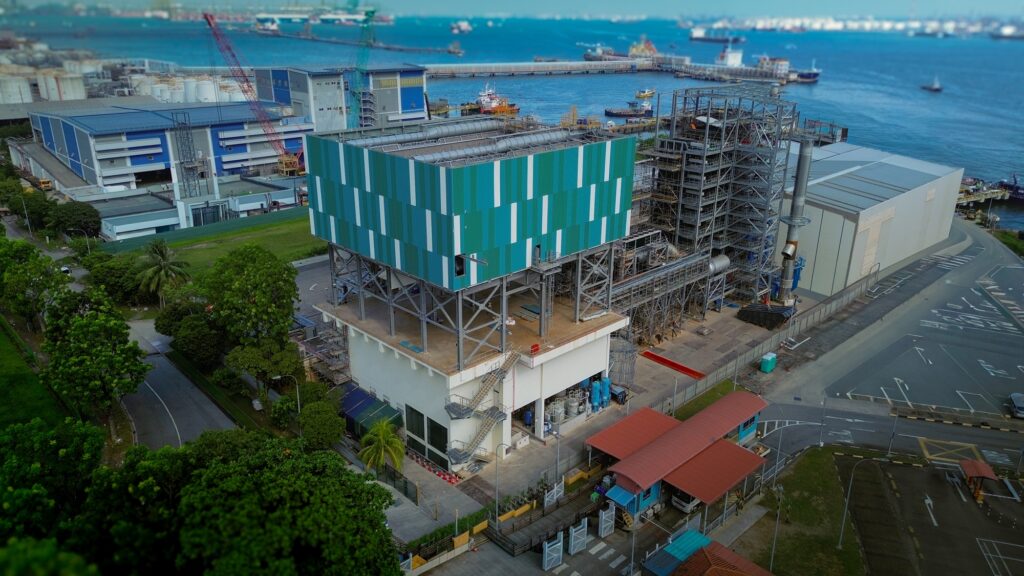
The demonstration project will be conducted at Rexus Bioenergy’s 9.9-MW waste-to-energy plant, providing a real-world environment for testing future-grid concepts and operational models.
Bridging Research and Industrial Deployment
The initiative is also intended to accelerate the transition of energy-grid technologies from research environments into live industrial deployments.
John Chen, Executive Director of the Advanced Energy and Decarbonisation Office (AEDO), said industry-led collaborations are important for converting promising technologies into practical applications.
“Industry-led collaborations such as Yokogawa’s project bring together complementary expertise to accelerate energy innovation, strengthen Singapore’s R&D capabilities, and support our longer-term decarbonization goals,” Chen said. [yokogawa.com]
To support the pilot, Yokogawa will integrate BaxEnergy’s Convera Power Plant Controller with its OpreX Collaborative Information Server platform. The combined system is designed to orchestrate multiple energy resources in real time while aggregating operational data into a unified environment to improve situational awareness and decision-making.
Building Digital Foundations for Future Grids
For Yokogawa, the award represents a significant milestone for its Sustainability Incubation Hub established in Singapore in 2024. The project serves as a demonstration of how industrial automation, digital integration, and grid-management technologies can converge to support future electricity networks.
“The Energy Grid 3.0 project is a direct embodiment of that vision and reflects Yokogawa’s commitment to supporting customers through their energy transition journey,” said Chay Kin Wah, President and CEO of Yokogawa Engineering Asia.
“Together with our partners, we aim not only to create a more resilient, sustainable solution for Singapore’s future energy system but also scalable solutions for the wider Southeast Asia, Oceania, and Taiwan region.”
02 November 2026
- Share: