
ASIA ELECTRONICS INDUSTRYYOUR WINDOW TO SMART MANUFACTURING
GF Launches AI-Driven Facilities Hub in Singapore
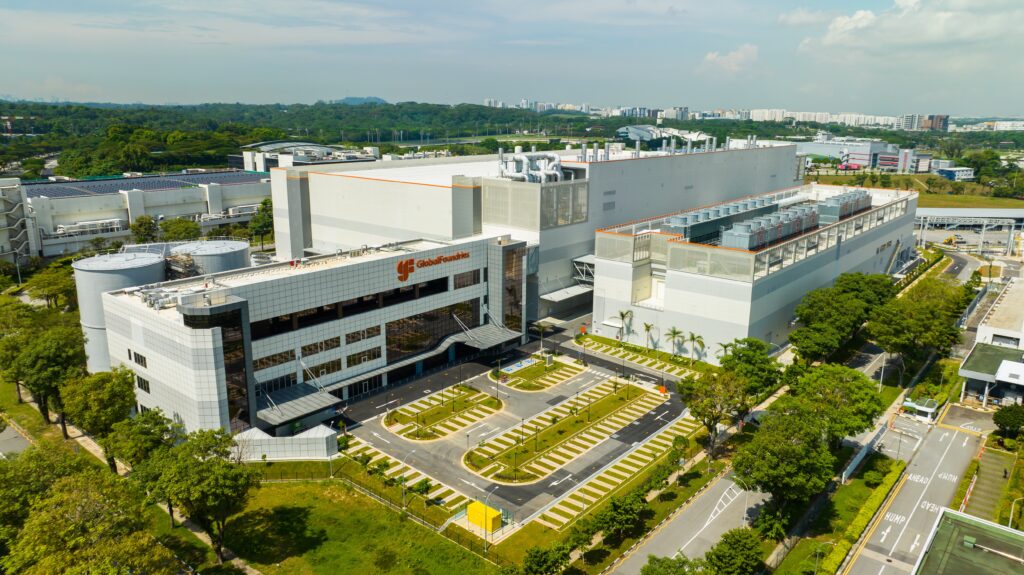
GlobalFoundries (GF) has opened an Advanced Facilities Control Centre (AFCC) in Singapore, marking a significant step in its effort to apply artificial intelligence and centralized data management to semiconductor manufacturing operations across its global network.
Developed in partnership with Siemens, the new AI-enabled command center consolidates facilities monitoring and operational data into a centralized platform, beginning with GF’s Singapore manufacturing campus and serving as a foundation for broader deployment across the company’s worldwide operations.
The move reflects a growing industry focus on applying digital technologies to improve manufacturing resilience, operational efficiency, and sustainability. While semiconductor production is often associated with process technology advances, facilities infrastructure remains critical to maintaining fab uptime and production consistency.
AI and Data at the Center of Operations
As part of the first deployment phase, five fab-specific control centers across the Singapore campus will be integrated into a single command center. The AFCC combines facilities data with operational metrics and incorporates AI-enabled functions, including predictive maintenance, advanced monitoring, and data visualization.
According to GF, these capabilities are intended to help engineering teams accelerate troubleshooting, identify root causes more quickly, detect emerging issues earlier, and prioritize corrective actions.
“Reliable facilities infrastructure is foundational to semiconductor manufacturing, and the AFCC represents an important step in building a more connected, intelligent and resilient global manufacturing network,” said Pradip Singh, Chief Manufacturing Officer at GlobalFoundries.
He added that the initiative will bring greater consistency, visibility, and intelligence to critical facilities infrastructure while supporting smarter and more sustainable operations.
Foundation for Global Deployment
Upon full deployment across GF’s manufacturing footprint, the company said the platform will integrate more than one million critical data points from facilities equipment worldwide.
The centralized model is expected to support performance benchmarking across sites while helping optimize the use of equipment, space, and workforce resources. GF also said the approach could reduce duplicated infrastructure, lower energy consumption, and decrease associated emissions.
Siemens views the project as a framework for scaling Industrial AI in semiconductor manufacturing.
“With trusted data, secure infrastructure and deep industrial know-how, we can scale predictive maintenance, advanced automation and Industrial AI with Singapore as the starting point,” said Isabel Chong, Managing Director, Digital Industries ASEAN at Siemens.
Robotics Extend Monitoring Capabilities
The AFCC also integrates autonomous robots equipped with thermal imaging, gas detection, vibration acoustics, and other anomaly-detection technologies. The robots conduct inspections across the manufacturing campus and transmit real-time data back to the command center for analysis.
According to GF, combining autonomous sensing with centralized monitoring enables earlier detection of potential issues and faster intervention.
“This is another step forward in semiconductor manufacturing excellence,” said Yew Kong Tan, Senior Vice President and General Manager, APAC Manufacturing and Singapore Site at GlobalFoundries. “By equipping our facilities engineers with data and AI-driven capabilities, we are modernising jobs and enabling our people to focus on higher-value diagnostics and problem-solving.”
The Singapore deployment serves as the first implementation of what GF intends to become a more connected and data-driven approach to facilities operations across its global manufacturing network.
29 October 2026
- Share: