ASIA ELECTRONICS INDUSTRYYOUR WINDOW TO SMART MANUFACTURING
SEIPI Chief Sees Path to Philippines’ US$100B Exports
The Philippine electronics industry is entering what many believe could be its most significant growth phase in years. As artificial intelligence infrastructure spending accelerates worldwide, demand for semiconductors and supporting electronic components is creating new opportunities across global manufacturing supply chains. For the Philippines, whose electronics sector remains the country’s largest export contributor, the challenge is no longer simply maintaining production volumes but expanding its role within the global semiconductor ecosystem.
Industry stakeholders are increasingly focused on how the country can capitalize on growing demand from AI data centers, automotive electronics, industrial systems and other fast-growing technology markets. At the same time, competition for semiconductor investments across Southeast Asia continues to intensify, placing renewed attention on issues such as electricity costs, logistics efficiency, workforce readiness and policy execution.
The Semiconductor and Electronics Industries in the Philippines Foundation Inc. (SEIPI) projects electronics exports could reach between US$53 billion and US$54 billion in 2026 following the US$49.64 billion achieved in 2025. Looking further ahead, industry leaders are discussing the possibility of eventually doubling exports to US$100 billion while strengthening capabilities beyond traditional assembly, testing and packaging operations.

For many executives, however, the bigger question is not whether demand exists, but whether the Philippines can position itself to capture a larger share of that growth. Achieving that goal will require balancing investment attraction, infrastructure improvements, talent development and long-term industrial strategy.
In this exclusive interview during the recent Philippine Semiconductor and Electronics Convention and Exhibition (PSECE) 2026, Dan Lachica, President of SEIPI, discusses the market drivers supporting export growth, competitive pressures within ASEAN, workforce priorities and the country’s long-term semiconductor ambitions.
AEI: What are the primary drivers supporting the industry’s export growth outlook?
Lachica: The growing demand for AI is becoming an important driver of electronics exports, particularly as investments in data centers increase the need for semiconductors, power-management devices, and supporting electronic components. For the Philippines, this is an opportunity to benefit from the AI boom through the products we already manufacture, even if we are not producing the AI processors themselves.
At the same time, automotive, industrial, and other electronics applications provide additional sources of demand, helping offset fluctuations in consumer electronics.
“The growing demand for AI is becoming an important driver of electronics exports, particularly as investments in data centers increase the need for semiconductors, power-management devices, and supporting electronic components.”– Dan Lachica, President, SEIPI
AEI: Beyond current projections, can the Philippines realistically reach US$100 billion in electronics exports?
Lachica: Yes, we believe this is an achievable long-term ambition, provided we can sustain growth beyond the current export base. Reaching US$100 billion would mean significantly increasing the scale of our industry, with existing companies expanding their operations and new manufacturers establishing production in the country.
It also means broadening the range of products we export and securing a larger role in supply chains where global demand is growing.
AEI: What must happen for the industry to achieve that target?
Lachica: One of the biggest priorities is addressing the cost and reliability of doing business in the Philippines, particularly electricity, logistics, and the time required to establish and expand manufacturing operations. These factors directly affect production costs and influence whether companies choose to invest here or in another country.
We also need to ensure that our workforce can support the industry’s future requirements, from advanced manufacturing to semiconductor engineering and chip design.
AEI: How can the Philippines strengthen its position in the global semiconductor ecosystem?
Lachica: Our opportunity is to build on the Philippines’ established role in semiconductor assembly, testing, and packaging, where we already have a skilled workforce and an established manufacturing presence. Rather than competing across every segment of the semiconductor industry, we should focus on areas where we can develop a stronger competitive advantage, including specialized packaging, testing, and power semiconductors.

“Rather than competing across every segment of the semiconductor industry, we should focus on areas where we can develop a stronger competitive advantage, including specialized packaging, testing, and power semiconductors.”
AEI: How does the country compare with regional competitors in attracting investments?
Lachica: Malaysia benefits from a deeper semiconductor ecosystem, while Vietnam has built a strong position in electronics manufacturing and continues to compete aggressively for new investments. The Philippines can leverage its existing manufacturing base and experienced workforce, but investors also compare operating costs, infrastructure, supplier availability, and the speed at which projects can be implemented.”
AEI: What role could the Pax Silica initiative play?
Lachica: The planned advanced manufacturing and technology hub under the U.S.-led Pax Silica initiative could strengthen the Philippines’ semiconductor ecosystem by attracting higher-value investments, accelerating technology transfer, and deepening our integration into global semiconductor supply chains.
AEI: What infrastructure issues still require urgent attention?
Lachica: As SEIPI, we believe the country must address critical bottlenecks in infrastructure and logistics, power reliability and cost, customs clearance, regulatory consistency, and digital connectivity to ensure the seamless operations of the hub.
Related Story: PSECE 2026 Signals ASEAN’s Semiconductor Shift
AEI: How concerned is the industry about engineering talent?
Lachica: Yes, retaining experienced engineers is a real concern for our industry, particularly because specialized semiconductor skills take time to develop, while overseas employers can offer more competitive compensation and career opportunities.
AEI: Is the talent pipeline adapting quickly enough?
Lachica: The Philippines is making progress in strengthening its semiconductor talent pipeline, but the challenge is ensuring that graduates are equipped for the demands of increasingly automated manufacturing environments.
Producing more graduates is only part of the solution. Engineers also need hands-on technical skills and practical experience.
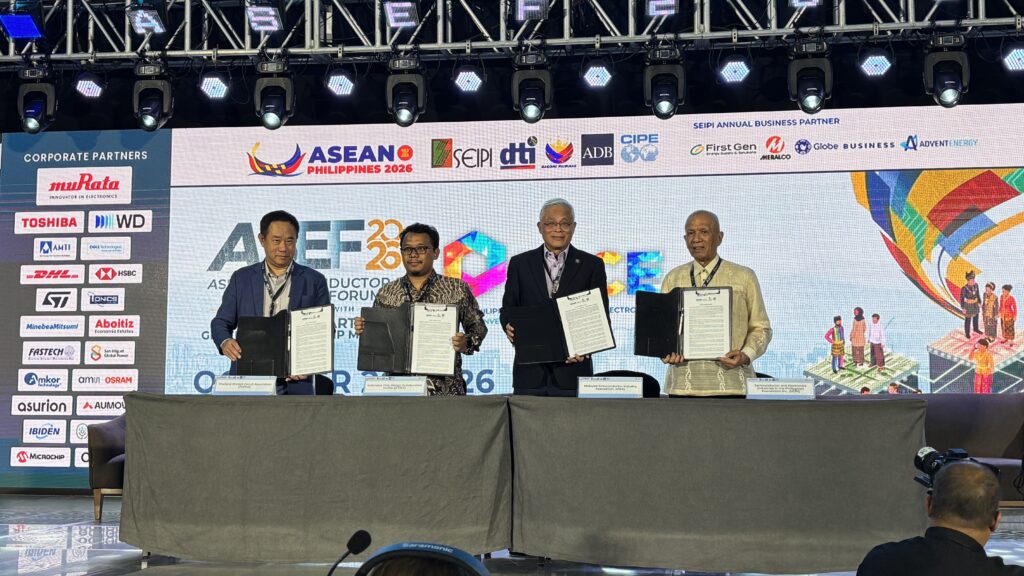
“The long-term viability and competitiveness of our industry will depend on our ability to evolve from being primarily a manufacturing base into a stronger contributor to technology development, engineering, and innovation.”
AEI: Looking ahead, what will define the industry’s long-term competitiveness?
Lachica: The long-term viability and competitiveness of our industry will depend on our ability to evolve from being primarily a manufacturing base into a stronger contributor to technology development, engineering, and innovation. Strengthening our capabilities in integrated circuit design, product development, prototyping, and research and development will allow us to capture greater value across the semiconductor supply chain.
— Cristian Canoza
03 November 2026
- Share: